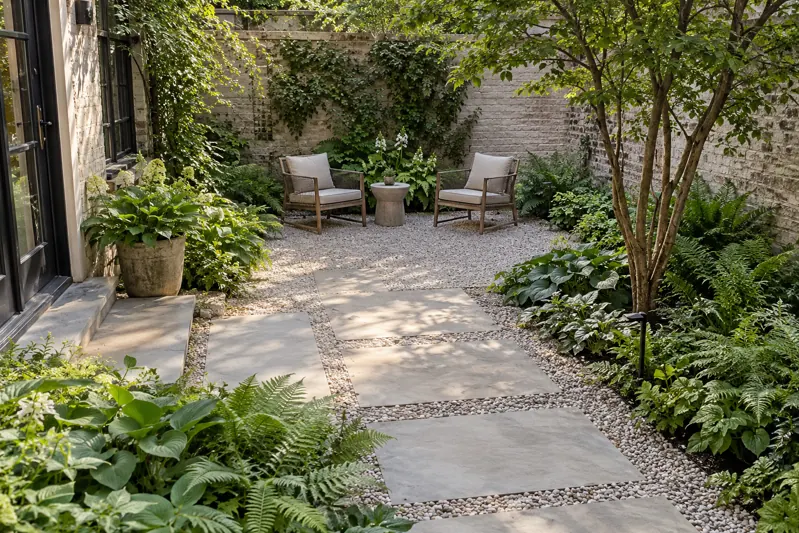
Small & shaded
A small courtyard, with room to breathe
Give a 6 × 4 m courtyard a clear route, a place to sit and a leafy edge. Start with the shade you actually have.
The idea library
Look for the conditions you have, then choose the kind of space you want to make.
66 ideas to explore.
No ideas match all these choices. Clear a filter or try a broader search. A sunny scheme is not a suitable substitute for a shaded site.
Small & shaded
Give a 6 × 4 m courtyard a clear route, a place to sit and a leafy edge. Start with the shade you actually have.
Long & narrow
Use changes of purpose and a continuous route to make a long plot feel considered. Three arrangements, with a measured example.
Front garden
Keep the everyday route clear, give bins and bikes an honest place, and use planting to make the arrival feel generous.
Back garden & backyard
Balance eating, play, growing and maintenance without turning the garden into a collection of competing features.
Side garden
A side garden can be planted without becoming an obstacle course. Start with the route, then use the space that remains.
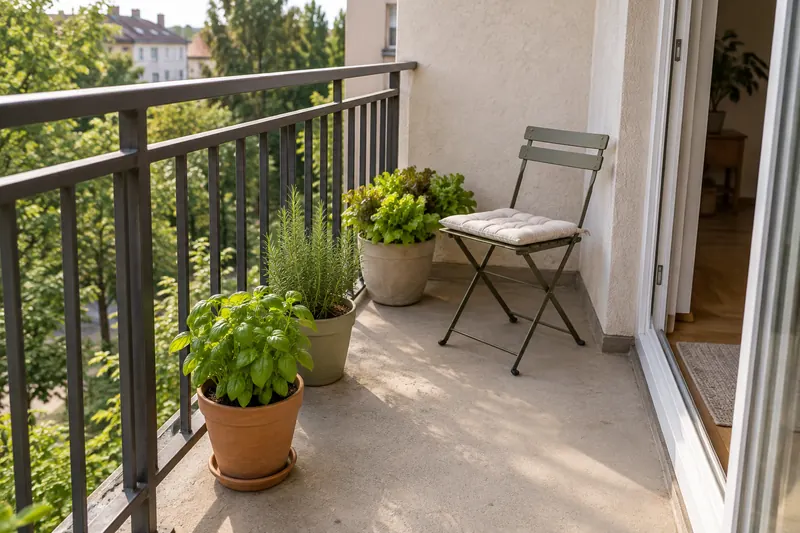
Balcony & renter
A reversible arrangement, a pre-purchase checklist and an absence plan for an exposed 3 × 1.5 m balcony.
Containers on the ground
Choose a coherent group of pots, calculate useful volume and plan the watering before the display grows.
Reversible rental ideas
Start with movable choices, a clear agreement and a plan for what happens when you leave.
Vertical gardening
Compare a climber, a freestanding support and a living wall by what each needs to keep working.
Roof gardens
Separate the building decisions from the planting decisions, then choose an arrangement that can be maintained through wind, weather and absences.
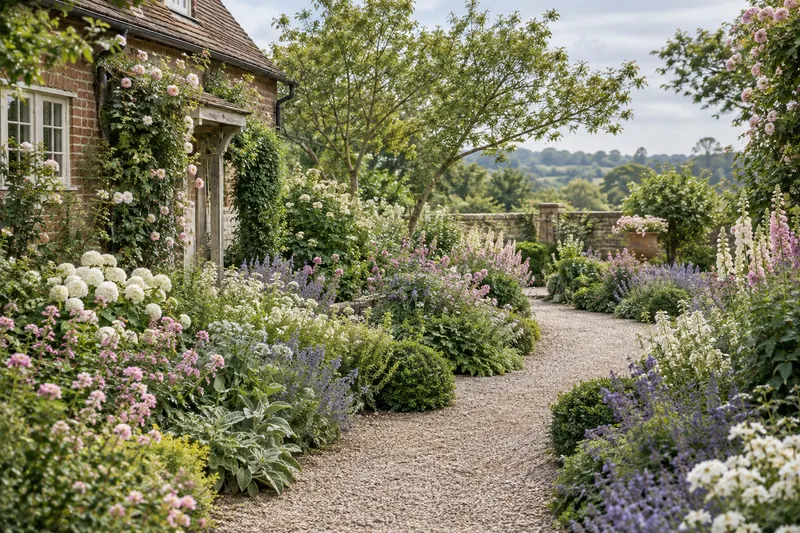
Cottage & English gardens
Build an abundant garden around repeatable plant groups, usable paths and a realistic seasonal routine.
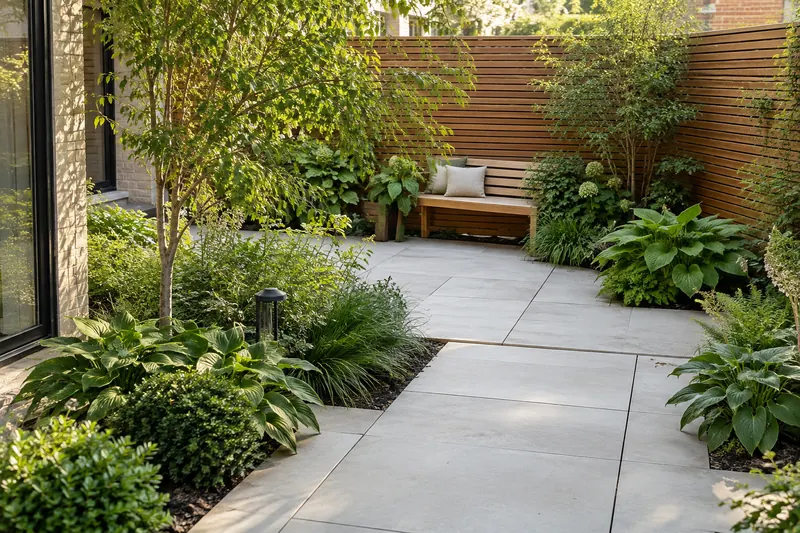
Modern gardens
Use clear proportions, a short material palette and generous planting blocks that can mature without constant correction.
Formal gardens
Choose an axis, reconcile the bed geometry and decide how much clipping and replacement the design can support.
Japanese-inspired gardens
Begin with a way of viewing and moving through space, then adapt the planting and materials to your own site.
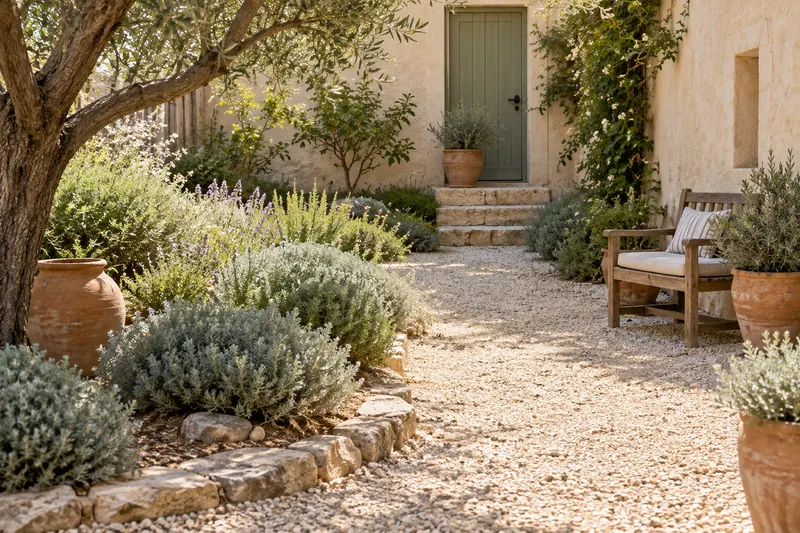
Mediterranean gardens
Keep the sun, shade and dry-season logic while changing the plants and winter strategy to suit your climate.
Tropical & bold foliage
Compare permanent hardy foliage, a seasonal display and a genuinely warm-climate planting before buying tender plants.
Naturalistic & meadow gardens
Match the planting method, seasonal appearance and cutting work to the ground you have.
Woodland gardens
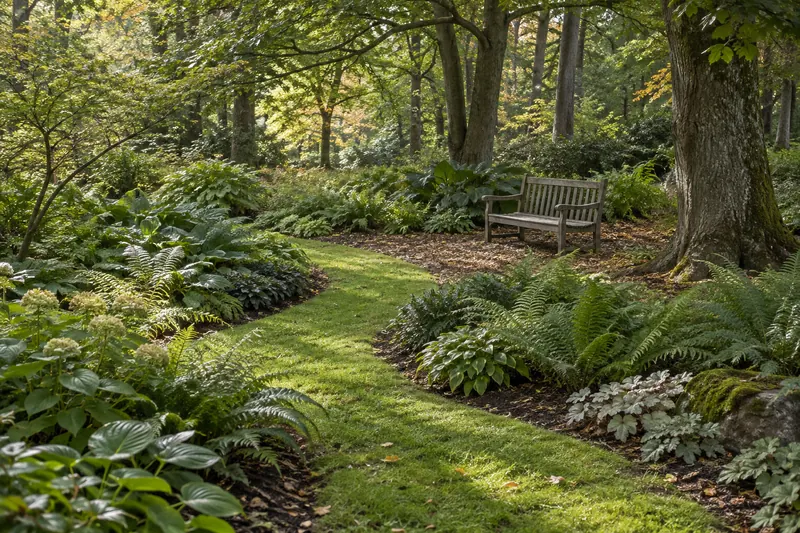
Protect the existing canopy, distinguish dry from damp shade and use seasonal light to guide the underplanting.
Coastal gardens
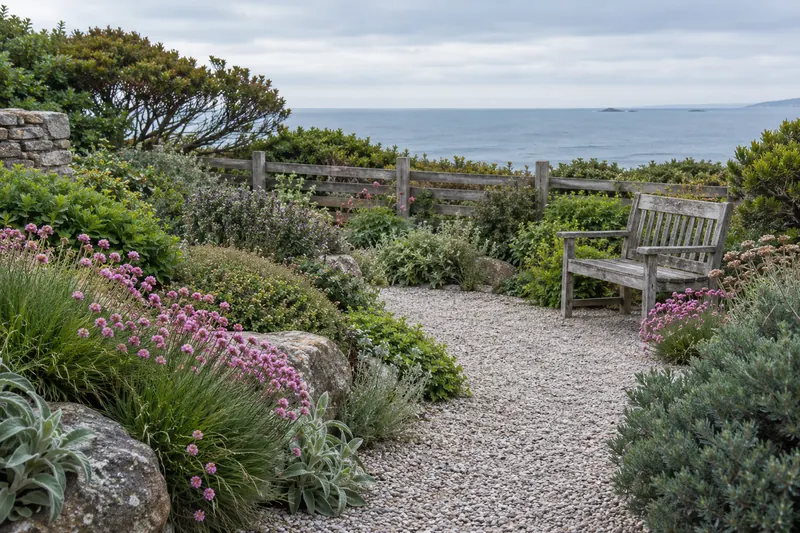
Separate salt spray, wind and soil problems, then build a planting and seating plan around the shelter you can actually provide.
Desert & water-wise gardens
Use regional plants and distinct watering zones instead of treating gravel and succulents as a complete design.
Rock & alpine gardens
Choose the microclimate and drainage first, then decide between a small trough, a border edge and a larger rock garden.
Moon & white gardens
Use pale flowers, foliage contrast and a readable route while keeping night lighting limited and purposeful.
Sensory gardens
Choose comfortable experiences, reachable planting and a quiet alternative instead of trying to stimulate every sense at once.
Sunny perennial border
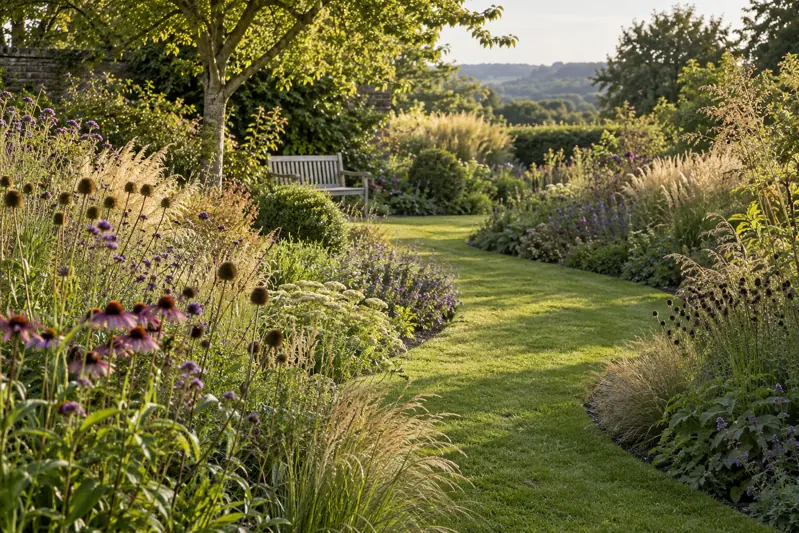
Arrange grasses, coneflowers and sage in a measured 6 × 3 m border, with access and establishment work kept visible.
Dry shade
Use a 6 × 2 m fern-and-bergenia trial to distinguish tolerable dryness from a site that needs a different approach.
Moist shade
Place four evergreen ferns and eight foamflowers in a 4 × 2 m border, then manage the spreading lower layer.
Moist clay
Combine a full-size dogwood, grasses and coneflowers around an explicit service route instead of squeezing a shrub into a narrow strip.
Drought-conscious planting
Use lavender and sage in a 6 × 2.5 m example while keeping winter drainage, summer humidity and first-year water in the decision.
Pollinator & native candidates
Place earlier beardtongue, summer coneflowers and later asters in a measured border, then check local native fit and missing habitat needs.
Foliage contrasts
Contrast upright leaves, fern fronds and low rounded foliage in a 3 × 3 m plan, with an explicit cold-climate substitution.
Spring-to-winter structure
Combine a spring bulb edge, summer flowers and winter foliage in a 4 × 4 m island that stays reachable from all sides.
Beginner raised or in-ground bed
Fit lettuce, carrots and bush beans into a 1.2 × 2.4 m bed, then connect the planting positions to local dates, fill volume and a realistic succession decision.
Vegetable layout choices
Compare an intensively divided small bed with two accessible crop rows, including the space the paths consume.
Food, herbs, fruit & flowers
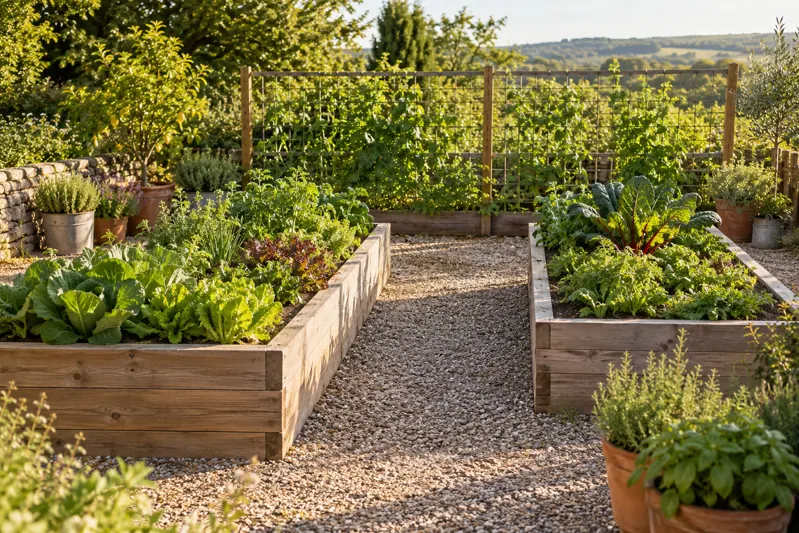
Use clear geometry to separate crops with different lifetimes, while keeping room to reach them.
Vegetables & culinary herbs in pots
Start with a reachable salad trough and separately watered herb pots, then plan for hot weather and absences.
Food with limited sun
Prioritize a suitable leafy crop, measure its light and keep a clear point at which you will change the plan.
Strawberries & fruit-tree decisions
Compare a managed strawberry patch with a tree that needs the right rootstock, pollination and long-term space.
Succession & crop records
Separate first harvest, final harvest and bed clearance; then decide whether a later crop has time to work.
Survey, brief & alternatives
A measured survey, a short decision brief and a full-size trial turn a collection of ideas into a buildable direction.
Dry, damp & seasonal shade
Separate light, root competition and moisture before choosing a shady-garden palette.
Clay soil
Protect workable soil, separate moisture from saturation and give clay-tolerant plants enough room.
Sand & fast drainage
Choose between a dry ornamental scheme and a deliberately watered productive zone, rather than giving every plant the same treatment.
Acidic, alkaline & chalky soil
Test the actual planting areas and choose compatible plants before committing to soil alteration.
Wet ground & waterlogging
Separate useful moisture, compaction, runoff and a high water table. They do not lead to the same garden.
Banks, slopes & changes of level
Separate a planted bank from a usable terrace, then decide what needs a professional survey.
Wind, salt & exposure
Map the exposure, choose an appropriate filter and keep plant tolerance separate from structural safety.
Heat, water & establishment
Use shade, planting zones and observed root moisture to decide where effort and water make sense.
A small cutting garden
Two narrow beds separate a seasonal flower crop from permanent plants, with sixteen positions and room to pick without trampling the soil.
Colour through the seasons
Build a palette around repeated forms, then identify the weeks when foliage, bulbs or an annual patch must do the work.
Pots, focal points & decoration
Choose one focal point, preserve the working routes and make seasonal changes with a realistic pot and storage plan.
Wildlife & native planting
Connect flowers, host plants, shelter and maintenance decisions instead of treating a pollinator label as a complete habitat.
Lawn alternatives
Retain the surface you use, replace the parts that do not earn their upkeep and plan the transition as carefully as the finished planting.
Rain gardens & runoff
Trace the water, test the assumptions and distinguish an intermittently wet planting from a pond or a drainage repair.
Ponds & garden water
Compare habitat, sound and appearance with water safety, maintenance access and the real space around the water.
Compost, peat-free & mulch
Keep soil improvement, container growing and surface covering separate, then calculate only the material you actually need.
Paths, patios & decking
Compare firm paving, loose surfaces and decks through access, drainage, weather, maintenance and complete installed cost.
Seating, dining & shade
Test furniture in use, compare movable and fixed shade and reserve the routes before selecting a pergola.
Privacy, boundaries & storage
Compare a hedge, screen or climber through mature width, seasonal views, wind and maintenance, while leaving room for bins and tools.
Garden lighting
Start with the route and the hours of use, then control glare, spill, brightness and unnecessary lighting of habitat.
Budget & phased projects
Separate measured quantities from local prices, include the hidden work and choose phases that leave a usable garden between them.
Seasonal & first-year care
Separate establishment from mature care and use growth, frost, heat and rainfall as triggers instead of copying another climate’s month list.
Plant problem triage
Separate water, roots, light, weather and living pests with a short observation record, then seek the right local identification when needed.
Accessible routes & comfortable gardening
Test routes, turns, working heights and sensory comfort with the actual users before choosing a standard-looking layout.
Children, pets & sensitivities
Separate play, plants, water and storage decisions, and use exact plant identities instead of a blanket safe-garden label.
2026 ideas worth testing
Separate forecasts, show-garden evidence and institutional changes, then turn an appealing idea into a small trial with an honest stopping point.
Wildfire-aware design
Separate plant appearance, fuel placement, building exposure and the maintenance you can sustain before adapting a garden style.