A drought-conscious border begins by reducing mismatches. Plants with compatible needs can share care; plants chosen only for a silver or purple appearance may still need very different conditions.
Check both the dry season and the wet one
Observe summer drying, reflected heat, winter drainage and humidity. A plant that tolerates a dry summer may fail in saturated winter soil. Check the profile's climate range and local advice rather than treating a warming climate as a guarantee of success.
Choose this compact palette when both species fit. Choose a regional water-wise design where the climate calls for a different palette. Choose the moist-clay plan where moisture retention is a permanent feature rather than something to remove.
Read the measured planting plan
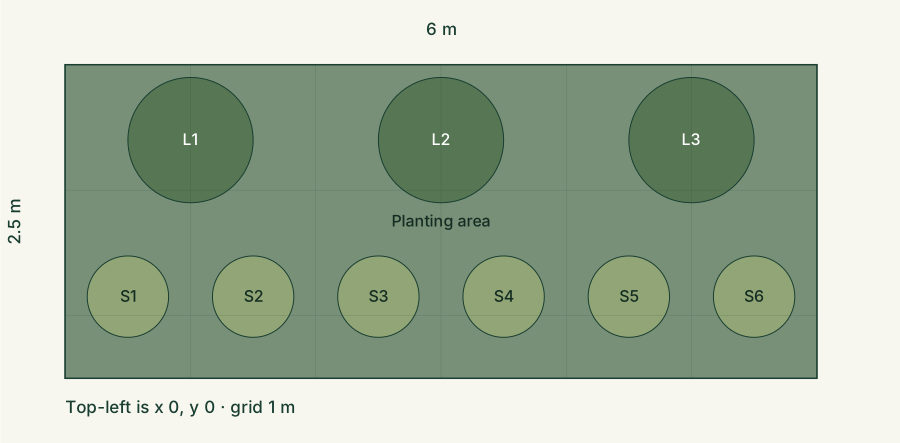
The outline is 6 × 2.5 m: 15 m². Planting beds occupy 15 m². The top is the visual rear, not a compass bearing. Paths outside the outline are additional space. Test reach and maintenance access before copying it; widen access or divide deep beds where needed.
Circles reserve adult spread, not the size of a new nursery pot. Gaps are deliberate. Soil and neighbouring growth can change the eventual size, so check the named plants and keep the ability to edit the scheme. The diagram is an original concept, not an installed garden.
Open this layout in the planner, choose “Use this example,” then edit positions and dimensions. Its current plant inventory follows additions and deletions. Export the editable plan as well as the drawing.
Use repeated mounds and spikes
Three lavender mounds form the rear rhythm and six sages create a lower flowering line. The scheme gives each plant its own mature envelope and leaves inspection space. It is not a closed hedge or a claim of continuous ground cover.
Summer is the main flowering period. The quieter season relies on surviving foliage and form, not an invented year-round bloom sequence. Lavender is also flagged for pet-toxicity concerns in its source profile; assess exposure before choosing a low planting beside a frequently used route.
Shopping list and exact positions
| Plant | Count | Diameter each |
|---|---|---|
| Lavandula angustifolia | 3 | 1 m |
| Salvia nemorosa | 6 | 0.65 m |
Total: 9 individual planting positions. Open each profile for source-backed size, light, moisture, climate and safety checks. A botanical match alone does not establish local native status or suitability.
Show centre coordinates for setting out
Measure x from the left and y from the top. All coordinates are metres. Plant labels match the diagram.
| Label | Centre x | Centre y |
|---|---|---|
| L1 | 1 | 0.6 |
| L2 | 3 | 0.6 |
| L3 | 5 | 0.6 |
| S1 | 0.5 | 1.85 |
| S2 | 1.5 | 1.85 |
| S3 | 2.5 | 1.85 |
| S4 | 3.5 | 1.85 |
| S5 | 4.5 | 1.85 |
| S6 | 5.5 | 1.85 |
Set out empty pots or temporary markers first. Check views, access and the mature circles before planting. For a compatible material applied at an illustrative 5 cm depth, the full bed area would be 750 litres before subtracting obstructions and crown clearances. This is geometry, not a prescribed mulch type or depth for every plant. Calculate your actual material and depth.
Separate establishment water from mature care
Record the watering method, who checks new plants and how absences are handled. Inspect the original root balls as well as the surrounding soil. Local weather, plant size and soil determine the interval; this plan supplies no universal litres-per-week prescription.
Watch for persistent wilting, soft failing crowns or water standing at the root zone. These observations need diagnosis before an automatic increase in irrigation. Do not use a gravel dressing to conceal an unresolved drainage problem.
Reduce work without abandoning the plants
Follow cultivar-appropriate pruning advice and remove spent stems only to the extent needed for your flowering and structural aims. Keep the mature shapes out of routes. If repeated rescue care is necessary, change the plant or position rather than calling the garden low maintenance.
Track water use if savings are an objective; this design does not claim a measured reduction. Compare the Mediterranean garden guide for seating, shade and material decisions that belong around the border.
Keep the assumptions visible
Sources & checks
The layout and calculations are original illustrative examples. Horticultural and access guidance is informed by the sources below, checked on 3 October 2026. Local conditions still determine suitability.
- RHS: planning a border from conditions and mature plant size
- NC State: Lavandula angustifolia — dimensions and conditions
- NC State: Salvia nemorosa — dimensions and conditions
- RHS: drought-resistant gardening
Prepared with AI assistance. No on-site assessment or professional approval is implied. Read our editorial approach.