Seasonal continuity does not require flowers every week. This example uses spring bulbs, summer flowering and persistent structure, while making the inevitable gaps and changing care visible.
Choose a sequence rather than a permanent peak
Use this scheme when a sunny island can be reached from all sides. The spring bulb layer, summer lavender and sage, and later foliage create different phases. In a cold or unsuitable humid climate, the lavender may be a poor permanent structure; change the palette rather than promising an evergreen result.
For more late-season flowers, compare the aster-led pollinator border. For shade, use the foliage composition. A seasonal plan must first be a compatible planting.
Read the measured planting plan
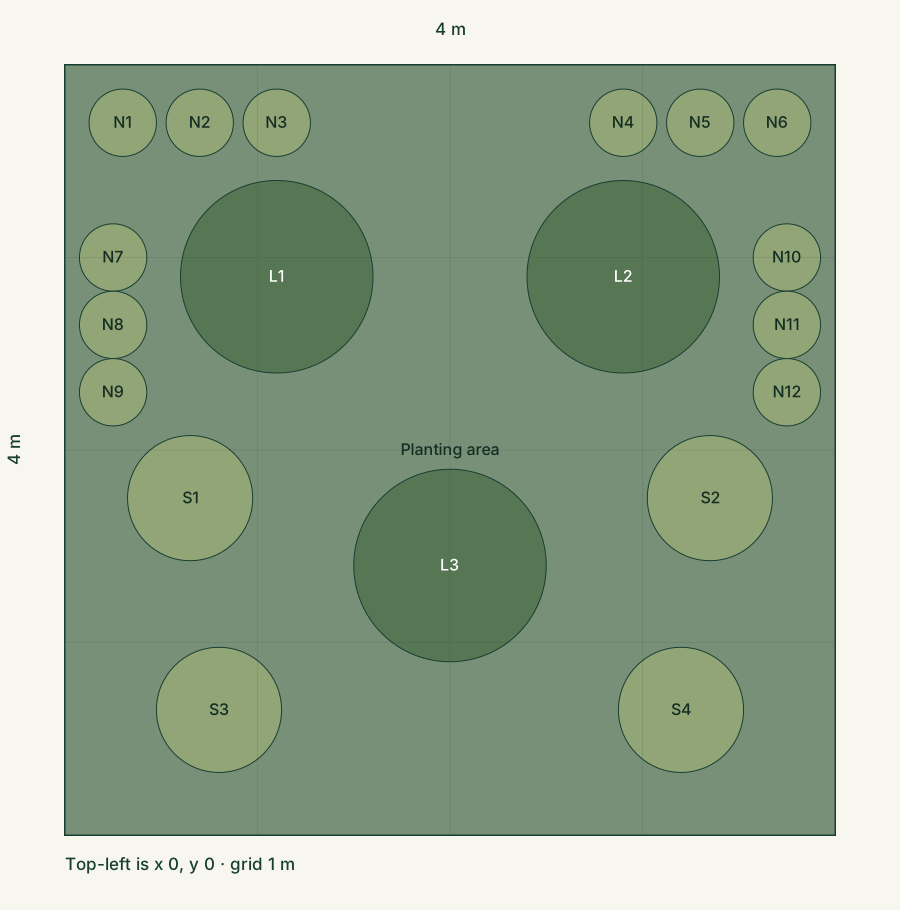
The outline is 4 × 4 m: 16 m². Planting beds occupy 16 m². The top is the visual rear, not a compass bearing. Paths outside the outline are additional space. Test reach and maintenance access before copying it; widen access or divide deep beds where needed.
Circles reserve adult spread, not the size of a new nursery pot. Gaps are deliberate. Soil and neighbouring growth can change the eventual size, so check the named plants and keep the ability to edit the scheme. The diagram is an original concept, not an installed garden.
Open this layout in the planner, choose “Use this example,” then edit positions and dimensions. Its current plant inventory follows additions and deletions. Export the editable plan as well as the drawing.
Specify the bulbs before buying
The original drawing has twelve individual daffodil positions, three lavender mounds and four sages: nineteen positions in total. Each bulb has a 0.35 m future-clump reservation. Select a named hardy garden daffodil with suitable size and timing; tender paperwhites are not an interchangeable purchase.
The genus profile gives a broad range, so exact flowering height and planting depth remain a cultivar decision. The RHS advises suitable draining conditions and leaving foliage to yellow naturally. The bulb edge will therefore look different after bloom, and it must not be immediately cleared for an incompatible summer display.
Shopping list and exact positions
| Plant | Count | Diameter each |
|---|---|---|
| Lavandula angustifolia | 3 | 1 m |
| Salvia nemorosa | 4 | 0.65 m |
| Narcissus (garden daffodils) | 12 | 0.35 m |
Total: 19 individual planting positions. Open each profile for source-backed size, light, moisture, climate and safety checks. A botanical match alone does not establish local native status or suitability.
Show centre coordinates for setting out
Measure x from the left and y from the top. All coordinates are metres. Plant labels match the diagram.
| Label | Centre x | Centre y |
|---|---|---|
| L1 | 1.1 | 1.1 |
| L2 | 2.9 | 1.1 |
| L3 | 2 | 2.6 |
| S1 | 0.65 | 2.25 |
| S2 | 3.35 | 2.25 |
| S3 | 0.8 | 3.35 |
| S4 | 3.2 | 3.35 |
| N1 | 0.3 | 0.3 |
| N2 | 0.7 | 0.3 |
| N3 | 1.1 | 0.3 |
| N4 | 2.9 | 0.3 |
| N5 | 3.3 | 0.3 |
| N6 | 3.7 | 0.3 |
| N7 | 0.25 | 1 |
| N8 | 0.25 | 1.35 |
| N9 | 0.25 | 1.7 |
| N10 | 3.75 | 1 |
| N11 | 3.75 | 1.35 |
| N12 | 3.75 | 1.7 |
Set out empty pots or temporary markers first. Check views, access and the mature circles before planting. For a compatible material applied at an illustrative 5 cm depth, the full bed area would be 800 litres before subtracting obstructions and crown clearances. This is geometry, not a prescribed mulch type or depth for every plant. Calculate your actual material and depth.
Write the four seasonal views
Spring: bulb flowers and foliage occupy the edge while the permanent mounds form the background. Summer: lavender and sage take the main flowering role as bulb foliage finishes. Autumn: evaluate shape and remaining flowers without expecting the spring display to persist. Winter: the aim is surviving foliage, spacing and a readable outline, not guaranteed flowers.
Use photographs of the actual garden to refine this timeline after establishment. If the quiet season feels too empty, improve the structure before adding another annual renewal task.
Preserve future space during establishment
Do not fill all the initial gaps with permanent plants. New lavender will be smaller than its drawn envelope, and bulb clumps can enlarge over time. Mark the bulb positions so later work does not damage them.
Inspect establishment moisture and drainage, then follow cultivar-appropriate pruning and bulb care. Review crowded clumps and flowering decline before dividing. For a spring-to-summer replacement display that you intend to renew each year, use separate containers or a dedicated seasonal bed instead of disrupting this permanent planting.
Keep the assumptions visible
Sources & checks
The layout and calculations are original illustrative examples. Horticultural and access guidance is informed by the sources below, checked on 3 October 2026. Local conditions still determine suitability.
- RHS: planning a border from conditions and mature plant size
- NC State: Lavandula angustifolia — dimensions and conditions
- NC State: Salvia nemorosa — dimensions and conditions
- NC State: Narcissus (garden daffodils) — dimensions and conditions
- RHS: growing daffodils, including drainage, cultivar choice and leaf care
Prepared with AI assistance. No on-site assessment or professional approval is implied. Read our editorial approach.