This small border makes two different textures do the work. Larger fern clumps provide a lasting frame; a lower flowering layer connects the ground in spring and remains part of the foliage composition afterwards.
Distinguish moist ground from waterlogging
Check the soil after rain and between wet periods. Moisture available to roots is useful here; persistent saturation is a different problem. Record where water collects and seek appropriate advice where drainage affects structures, neighbours or significant trees.
Choose the dry-shade trial for a dry root zone. Choose the courtyard arrangement when seating and circulation need to be planned around the planting. This border is only the planting footprint, not a complete outdoor room.
Read the measured planting plan
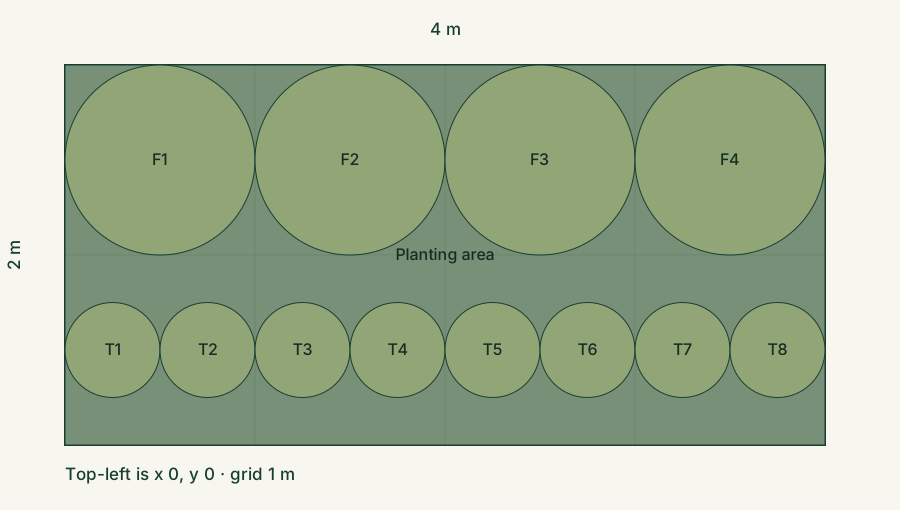
The outline is 4 × 2 m: 8 m². Planting beds occupy 8 m². The top is the visual rear, not a compass bearing. Paths outside the outline are additional space. Test reach and maintenance access before copying it; widen access or divide deep beds where needed.
Circles reserve adult spread, not the size of a new nursery pot. Gaps are deliberate. Soil and neighbouring growth can change the eventual size, so check the named plants and keep the ability to edit the scheme. The diagram is an original concept, not an installed garden.
Open this layout in the planner, choose “Use this example,” then edit positions and dimensions. Its current plant inventory follows additions and deletions. Export the editable plan as well as the drawing.
Know what the two plants contribute
The four Christmas ferns form the rear layer. Eight foamflowers form the nearer line, with spring flowers and foliage below the fronds. This combination leaves the fern shapes legible rather than mixing many similarly sized plants.
Foamflower can spread by runners, so its drawn circle is an initial adult allocation, not a permanent boundary it will respect. Its later joining growth is part of the intended effect; edit it where it crowds a neighbour or reaches an access route. There is no promised summer flowering replacement in this low-work version.
Shopping list and exact positions
| Plant | Count | Diameter each |
|---|---|---|
| Polystichum acrostichoides | 4 | 1 m |
| Tiarella cordifolia | 8 | 0.5 m |
Total: 12 individual planting positions. Open each profile for source-backed size, light, moisture, climate and safety checks. A botanical match alone does not establish local native status or suitability.
Show centre coordinates for setting out
Measure x from the left and y from the top. All coordinates are metres. Plant labels match the diagram.
| Label | Centre x | Centre y |
|---|---|---|
| F1 | 0.5 | 0.5 |
| F2 | 1.5 | 0.5 |
| F3 | 2.5 | 0.5 |
| F4 | 3.5 | 0.5 |
| T1 | 0.25 | 1.5 |
| T2 | 0.75 | 1.5 |
| T3 | 1.25 | 1.5 |
| T4 | 1.75 | 1.5 |
| T5 | 2.25 | 1.5 |
| T6 | 2.75 | 1.5 |
| T7 | 3.25 | 1.5 |
| T8 | 3.75 | 1.5 |
Set out empty pots or temporary markers first. Check views, access and the mature circles before planting. For a compatible material applied at an illustrative 5 cm depth, the full bed area would be 400 litres before subtracting obstructions and crown clearances. This is geometry, not a prescribed mulch type or depth for every plant. Calculate your actual material and depth.
Establish the lower layer carefully
Set out all twelve positions before planting, checking that the fern crowns fit within the bed at maturity. Keep access from the sides that you actually have. If the back is against a wall and cannot be reached, reduce bed depth or add suitable access rather than working over the plants.
Inspect root-zone moisture, weeds and crowding through the first season. Record locations that dry faster than the rest. A shaded bed can still be dry beneath an overhang or beside roots; that local mismatch needs a separate response.
Keep a clear mature composition
Remove damaged foliage when necessary and manage runners selectively. Retain the distinction between the large fronds and lower ground layer. If a fern fails, diagnose its site before replacing it repeatedly with the same plant.
For more varied foliage, compare the shaded foliage composition. It adds a climate constraint and more individual choices. More species are useful only when their roles and conditions justify the extra work.
Keep the assumptions visible
Sources & checks
The layout and calculations are original illustrative examples. Horticultural and access guidance is informed by the sources below, checked on 3 October 2026. Local conditions still determine suitability.
- RHS: planning a border from conditions and mature plant size
- NC State: Polystichum acrostichoides — dimensions and conditions
- NC State: Tiarella cordifolia — dimensions and conditions
- RHS: shade planting combinations
Prepared with AI assistance. No on-site assessment or professional approval is implied. Read our editorial approach.