A potager combines growing and appearance. The practical trick is to give each part a clear job, rather than mixing every attractive edible into one crowded bed.
Choose permanent and seasonal parts deliberately
Use one bed for a leafy annual crop, one for perennial herbs, one for managed fruit and one for a seasonal flower display. This gives the garden a readable structure even when an annual crop finishes. It also prevents a perennial fruit patch from being disturbed whenever vegetables rotate.
Reject this arrangement if the main aim is maximum vegetable area: the cross-route deliberately uses a large share of the footprint. Choose parallel rows for larger harvest batches, or one small mixed food bed for a simpler first season.
Read the four-bed drawing
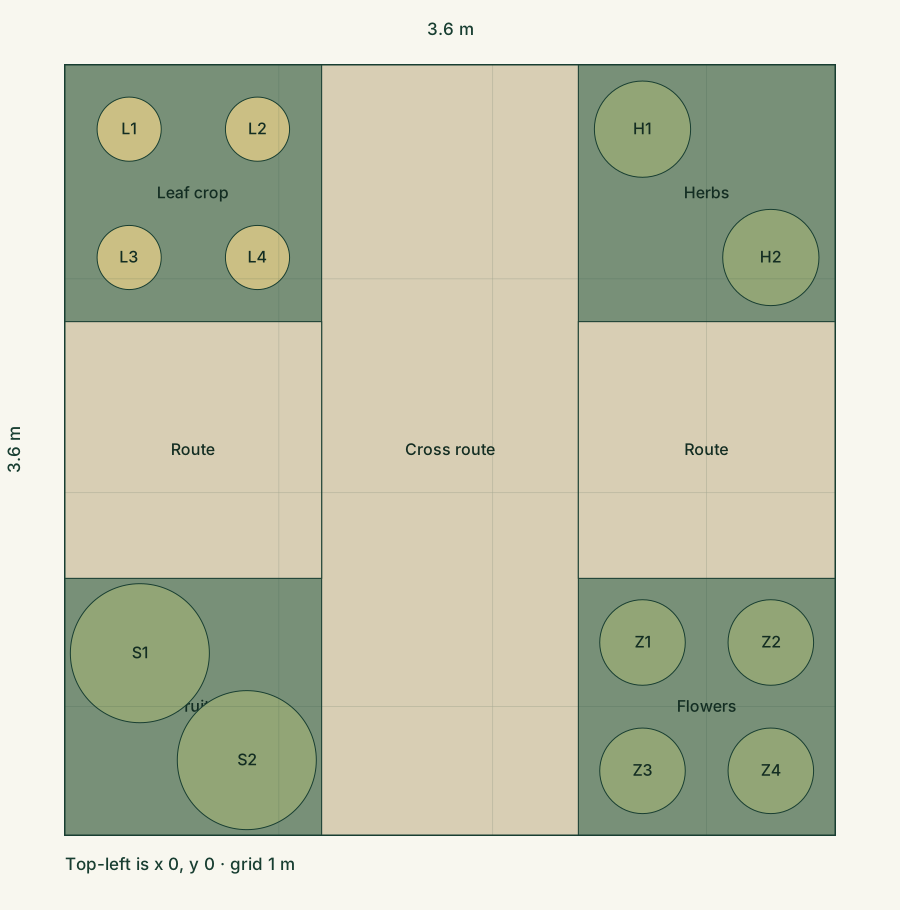
Four 1.2 m-square beds total 5.76 m². A 1.2 m-wide cross provides 7.2 m² of route within the 12.96 m² outline. The cross is counted once at its centre. Full-size trials still decide whether these dimensions fit you; additional outer access is needed if you cannot reach from the inner edges.
The initial list is four lettuces, two chive clumps, two strawberry plants and four zinnias: 12 plants. The adult-space circles are 45 cm for chives, 65 cm for strawberries and 40 cm for zinnias; the lettuce circles mark crop positions. Strawberry runners need ongoing management beyond that initial reservation.
Set out the positions and choose actual plants
All coordinates are metres from the top-left corner. Lettuce centres are x 0.3 and 0.9 at y 0.3 and 0.9. Chives are at (2.7, 0.3) and (3.3, 0.9). Strawberries are at (0.35, 2.75) and (0.85, 3.25), about 71 cm apart diagonally. Zinnias are at x 2.7 and 3.3, with y 2.7 and 3.3.
Choose a locally adapted strawberry cultivar and growing system before buying. Here, the two plants are kept as individually managed clumps, with runners controlled; this is not an expanding matted-row system. Choose a zinnia cultivar whose stated height and spacing suit the view and available support. The flower bed is ornamental, with no edible-flower claim.
Use the editable potager to change a bed or plant. Read each linked profile for climate, conditions and safety: chives, for example, have culinary uses but are unsuitable for pet chewing.
Keep it useful through the season
In a suitable temperate cycle, the chives and strawberries provide early growth, lettuce occupies a cooler crop window and zinnias provide a warm-season display. Those roles do not promise uninterrupted harvest or flowers. Empty annual beds can be prepared for a later suitable crop, covered appropriately, or left intentionally unplanted while the next decision is made.
If late heat makes lettuce unreliable, change its sowing season rather than treating the geometric bed as a guarantee. If zinnias are removed after frost, retain clean edging and the perennial beds as the winter structure. Keep ornamental bulbs with ingestion risk out of food-harvest areas.
Make maintenance part of the symmetry
Check moisture in each bed, thin or replace failed annual positions and keep the paths clear of runners, hoses and pots. Let chosen chive flowers remain for interest, then control unwanted seedlings. Harvest fruit promptly and inspect for damage.
Strawberry first-year flower removal and renewal differ by crop system; use the fruit guide before assuming an immediate harvest. Record each perennial bed's age so declining plants can be renewed deliberately. If four different tasks feel excessive, replace one bed's role with a repeated suitable crop and simplify the care.
Keep the assumptions visible
Sources & checks
The layout and calculations are original illustrative examples. Horticultural and access guidance is informed by the sources below, checked on 3 October 2026. Local conditions still determine suitability.
- NC State: lettuce
- NC State: chives
- NC State: garden strawberry
- NC State: zinnia
- Maryland Extension: strawberry crop systems
Prepared with AI assistance. No on-site assessment or professional approval is implied. Read our editorial approach.