This border uses a tall grassy background, a middle layer of summer flowers and a lower repeated line of spikes. It is designed to look coherent as a group, with space around each adult plant rather than an instant packed display.
Confirm the fit and choose an alternative
Choose this scheme for a sunny bed with draining soil and the ability to check water during establishment. It is an ornamental combination, not an all-native planting claim. Check the three plant profiles against your local cold, heat and moisture conditions.
Choose the dry-border plan instead where reliable mature-season water is limited and its plants fit. Choose the moist-shade plan when the bed has too little sun. Reducing a sunny plant's spacing will not compensate for inadequate light.
Read the measured planting plan
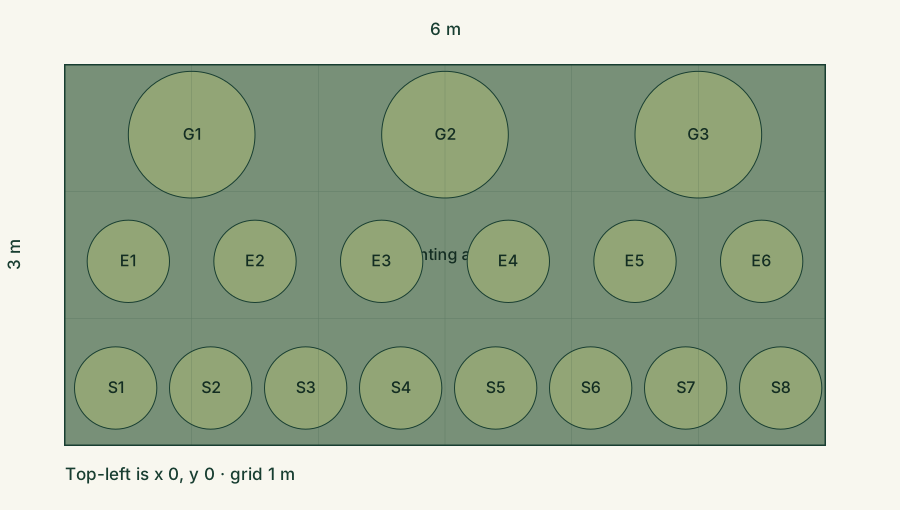
The outline is 6 × 3 m: 18 m². Planting beds occupy 18 m². The top is the visual rear, not a compass bearing. Paths outside the outline are additional space. Test reach and maintenance access before copying it; widen access or divide deep beds where needed.
Circles reserve adult spread, not the size of a new nursery pot. Gaps are deliberate. Soil and neighbouring growth can change the eventual size, so check the named plants and keep the ability to edit the scheme. The diagram is an original concept, not an installed garden.
Open this layout in the planner, choose “Use this example,” then edit positions and dimensions. Its current plant inventory follows additions and deletions. Export the editable plan as well as the drawing.
Understand the three layers
Three switchgrasses form the repeating background, six coneflowers create the middle rhythm and eight sages define the nearer edge. The sage is not an evergreen hedge; the plan changes as plants grow and die back. Check the actual cultivar heights if preserving a view is essential.
Spring begins with emerging foliage, followed by the main flowering period and later seed heads and grass structure. This is not a promise of flowers in every month. If spring flowers are the priority, compare the bulb-led seasonal plan rather than filling every gap impulsively.
Shopping list and exact positions
| Plant | Count | Diameter each |
|---|---|---|
| Panicum virgatum | 3 | 1 m |
| Echinacea purpurea | 6 | 0.65 m |
| Salvia nemorosa | 8 | 0.65 m |
Total: 17 individual planting positions. Open each profile for source-backed size, light, moisture, climate and safety checks. A botanical match alone does not establish local native status or suitability.
Show centre coordinates for setting out
Measure x from the left and y from the top. All coordinates are metres. Plant labels match the diagram.
| Label | Centre x | Centre y |
|---|---|---|
| G1 | 1 | 0.55 |
| G2 | 3 | 0.55 |
| G3 | 5 | 0.55 |
| E1 | 0.5 | 1.55 |
| E2 | 1.5 | 1.55 |
| E3 | 2.5 | 1.55 |
| E4 | 3.5 | 1.55 |
| E5 | 4.5 | 1.55 |
| E6 | 5.5 | 1.55 |
| S1 | 0.4 | 2.55 |
| S2 | 1.15 | 2.55 |
| S3 | 1.9 | 2.55 |
| S4 | 2.65 | 2.55 |
| S5 | 3.4 | 2.55 |
| S6 | 4.15 | 2.55 |
| S7 | 4.9 | 2.55 |
| S8 | 5.65 | 2.55 |
Set out empty pots or temporary markers first. Check views, access and the mature circles before planting. For a compatible material applied at an illustrative 5 cm depth, the full bed area would be 900 litres before subtracting obstructions and crown clearances. This is geometry, not a prescribed mulch type or depth for every plant. Calculate your actual material and depth.
Establish without hiding failures
Before planting, resolve weeds, obvious compaction and drainage questions by methods appropriate to the site. Locate utilities and protect existing roots. Mark plant positions, then inspect each newly planted root zone through the first growing season; surrounding moist soil does not prove the original root ball is moist.
Keep a weekly observation record during establishment and check more often in demanding weather. Look for wilting, saturation, leaning stems or one species consistently failing. Diagnose the cause before adding fertilizer or increasing irrigation across the whole bed.
Edit the mature border
Retain some seed heads and grass structure where appropriate, but use local habitat and fire guidance to decide what remains through the dormant season. Keep access for seasonal cutting and for dividing plants that outgrow their allotted space.
For a lower display, select verified shorter cultivars and redraw their actual spread. For fewer deadheading tasks, accept a shorter peak rather than promising repeat flowers without work. Save the chosen trade-off in the notebook and price the live inventory from the planner.
Keep the assumptions visible
Sources & checks
The layout and calculations are original illustrative examples. Horticultural and access guidance is informed by the sources below, checked on 3 October 2026. Local conditions still determine suitability.
- RHS: planning a border from conditions and mature plant size
- NC State: Panicum virgatum — dimensions and conditions
- NC State: Echinacea purpurea — dimensions and conditions
- NC State: Salvia nemorosa — dimensions and conditions
Prepared with AI assistance. No on-site assessment or professional approval is implied. Read our editorial approach.