A border that always looks full and a patch that supplies armfuls of flowers are different design briefs. Give cutting its own reachable space if removing stems would spoil the main garden view.
Choose a picking patch or a display border
A dedicated annual patch suits a gardener who wants frequent cutting and can sow, thin, support and renew it. A mixed perennial border offers a steadier framework, but a stem cut for the house is no longer part of the outdoor display. A few containers can provide a small trial where ground is unavailable, with more attention to watering.
Choose the dedicated version when harvesting is the main aim. Choose the mixed perennial border when the view matters more than the number of stems. Reject a large annual patch if several weeks away coincide with its establishment or peak growth. Buying fewer locally grown stems may fit your life better than maintaining a neglected cutting bed.
Set out two different beds
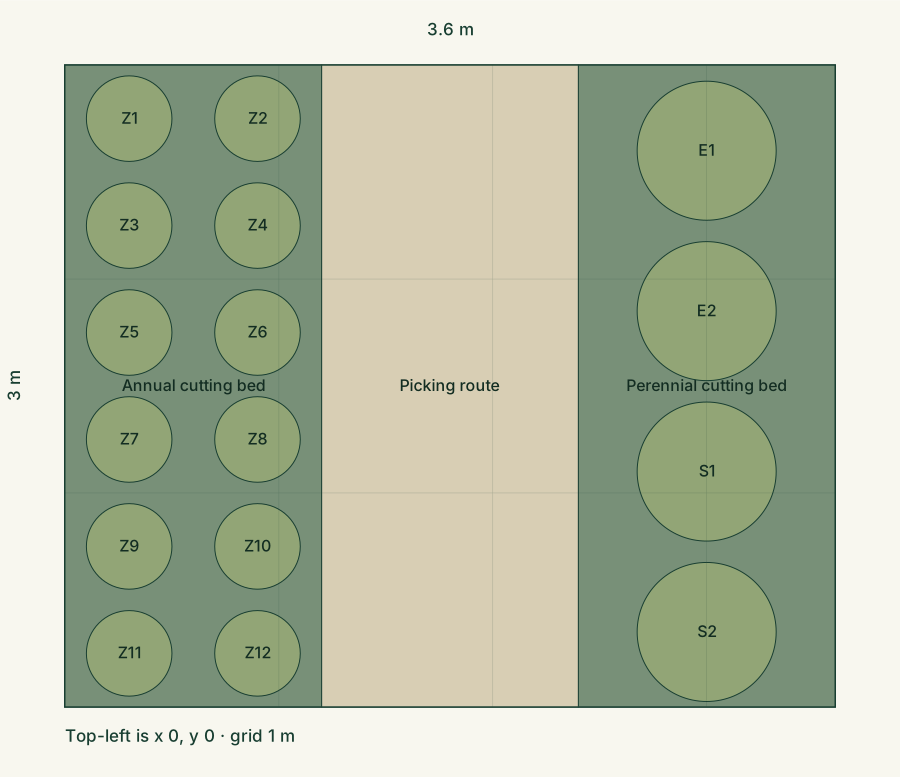
This original layout is 3.6 × 3 m, or 10.8 m²: two 1.2 × 3 m beds, totalling 7.2 m², with a 1.2 × 3 m central route of 3.6 m². Access beyond the outer edges is additional. Test reach before building; 1.2 m is an example width, not a universal accessible specification.
The left bed contains 12 zinnias, reserved at 40 cm diameter. Centres are x 0.3 and 0.9 m, and y 0.25, 0.75, 1.25, 1.75, 2.25 and 2.75 m. The right bed contains 2 coneflowers and 2 salvias, each at 65 cm diameter: centre x 3 m, y 0.4 and 1.15 m for coneflowers, 1.9 and 2.65 m for salvias. Sixteen positions in total.
The right bed deliberately has more open space. It reserves mature perennial growth and room to inspect plants rather than promising a first-year wall of flowers. Select named cultivars suitable for cutting and your climate; the species profiles are the size reference, not a guarantee of stem length or colour. Adapt the cutting layout before ordering.
Give the seasonal crop a workable sequence
Mark the zinnia bed as two six-plant blocks. Establish the first when local frost, soil and seed instructions allow. A second planting about three weeks later is an optional trial, not an automatic extension of harvest: check whether the remaining season is long enough. Keep its six spaces empty until then. Do not count eighteen plants by adding the second block twice.
Choose the cultivar’s actual sowing-to-flower interval for the date calculator; its maturity field can represent first flowers if you label that assumption. Frost-free dates alone do not prove adequate warmth. In a short season, plant both blocks together or abandon the second sowing.
Spring bulbs can extend a different ornamental bed’s season, but inserting them into this annual bed creates a conflict if foliage must remain while the annual crop is planted. Use the separate bulb-and-perennial island or genuinely separate bulb containers. This plan makes no year-round cutting promise.
Plan support, water and the harvest route
The RHS recommends reachable rows and support for taller cutting plants. Install suitable supports before stems tangle, following the product and cultivar guidance; keep ties and projecting ends out of the path. Zinnias need a sunny, draining position, and their NC State profile flags powdery mildew susceptibility. Space and airflow matter more than squeezing in extra plants.
Inspect the root zone and new growth during establishment, particularly in heat. Cut only material you can use, with clean tools, and record whether the chosen cultivar regrows useful stems. Keep some perennial flowers and seed heads where that is part of the garden or wildlife purpose. Cutting and leaving every seed head are competing goals; allocate different plants to each.
Review after one growing season
Record three things each week: usable stems, care time and gaps in the display. Count what actually happened; this site does not estimate a yield. If the annual bed demanded too much water or attention, reduce it to six positions next year and leave the rest in an appropriate covered-soil state while redesigning.
Budget for seed or plants, supports, suitable soil amendments only where needed, water access and replacement risk. The geometric volume of a 5 cm layer over both beds is 7.2 × 0.05 = 360 litres; whether that material and depth are appropriate is a separate horticultural decision. Keep the annual and perennial care notes separate in your notebook.
Keep the assumptions visible
Sources & checks
The layout and calculations are original illustrative examples. Horticultural and access guidance is informed by the sources below, checked on 7 October 2026. Local conditions still determine suitability.
- RHS: cutting gardens, access, supports and plant selection
- NC State: Zinnia elegans, mature size and culture
- NC State: Echinacea purpurea
- NC State: Salvia nemorosa
Prepared with AI assistance. No on-site assessment or professional approval is implied. Read our editorial approach.