Repeat an upright grass, a flowering middle and a low front group. Use a small trial to learn the site before turning the whole garden into a meadow. The original measured example shows where the starting plants go and what to check before extending the idea.
Use the site requirements before the picture
Sun · dry-to-medium draining soil · 6 × 3.3 m bed plus external access. A cold zone is only one check: inspect soil, heat, summer water and mature access too. The drawing’s top is a viewing edge, not a north arrow.
This palette needs sun and draining ground. Very rich or wet conditions can change the plants’ height and habit; shade can weaken the intended upright rhythm. Check establishment water before buying a drought-tolerant label.
Read the measured planting arrangement
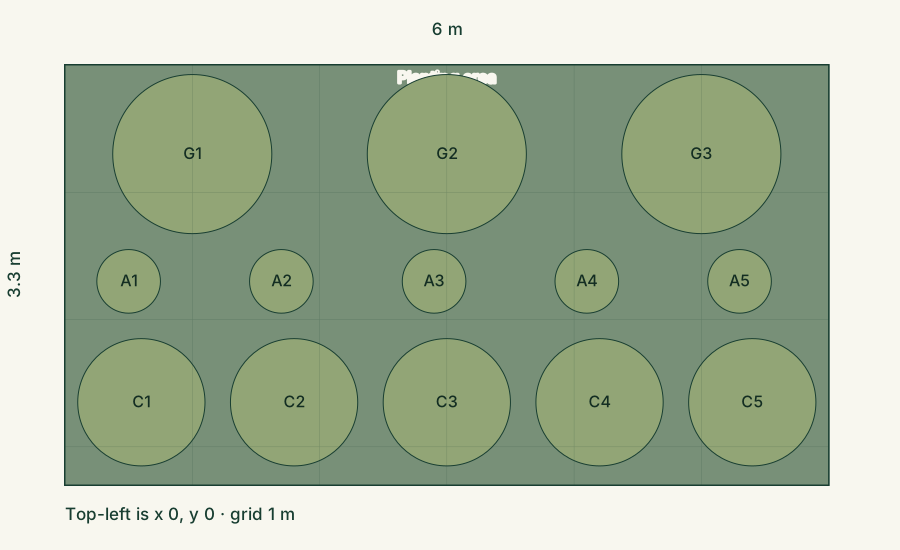
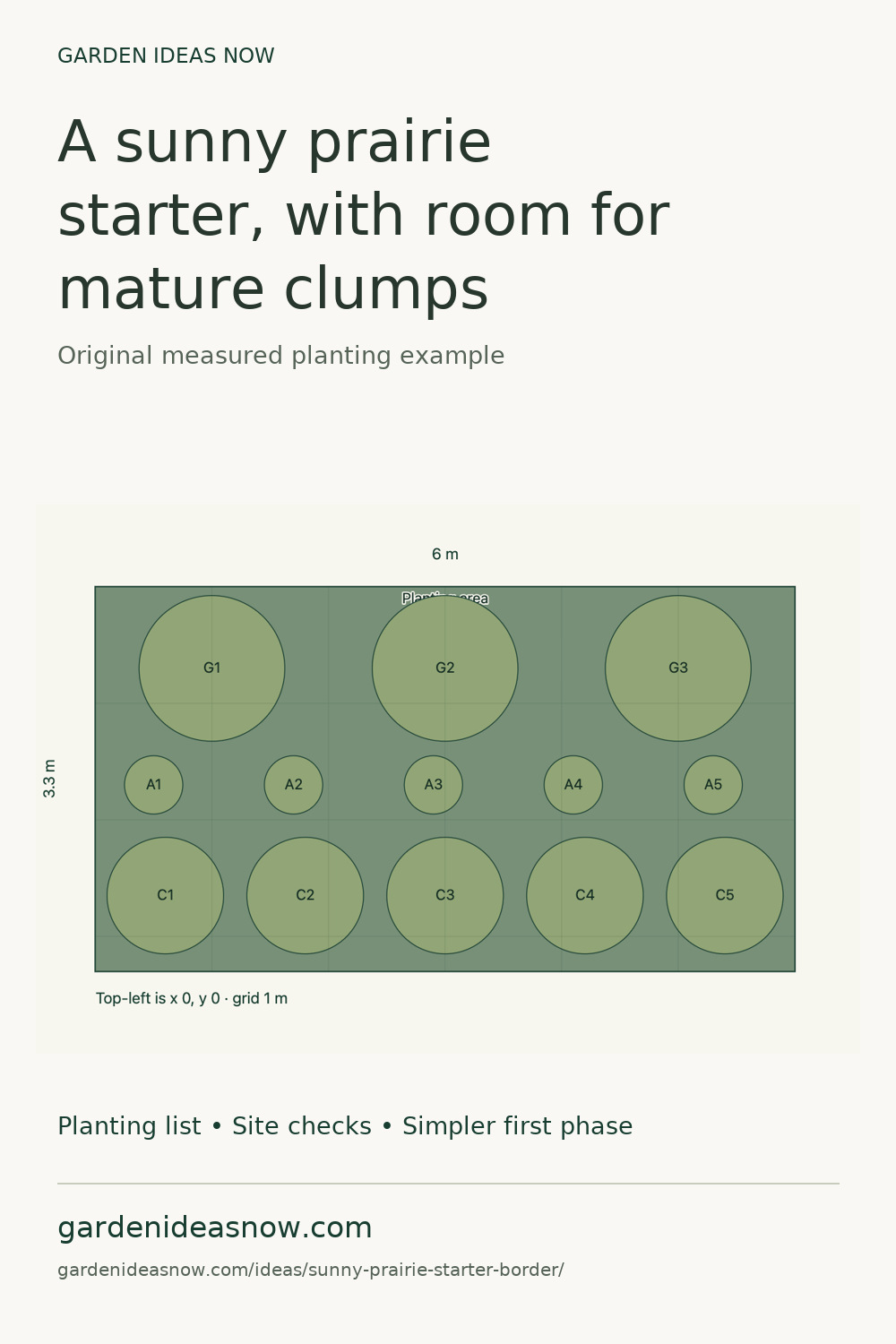
The worked bed is 6 × 3.3 m. Maintenance access is additional. Every plant is stored as a separate object with a botanical name, position and reserved diameter.
The rear grass clumps reserve 1.25 m each because the source prose gives a wider spread than its dimension field. Coreopsis receives a full 1 m circle for the same reason. Five small pots placed close together would not reproduce this drawing.
Choose the actual species
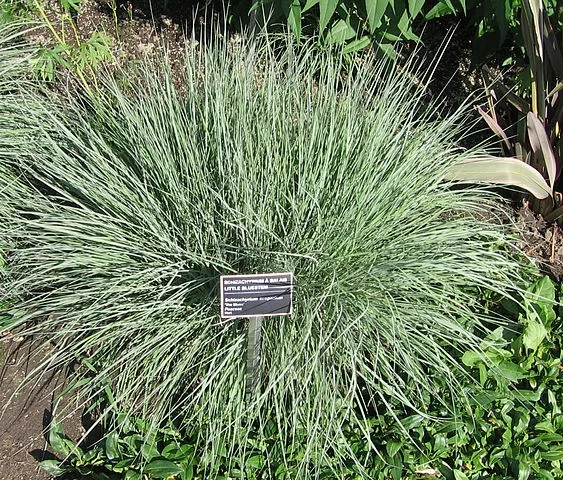
- Schizachyrium scoparium — Little bluestem: Upright warm-season grass with autumn colour and a winter silhouette.
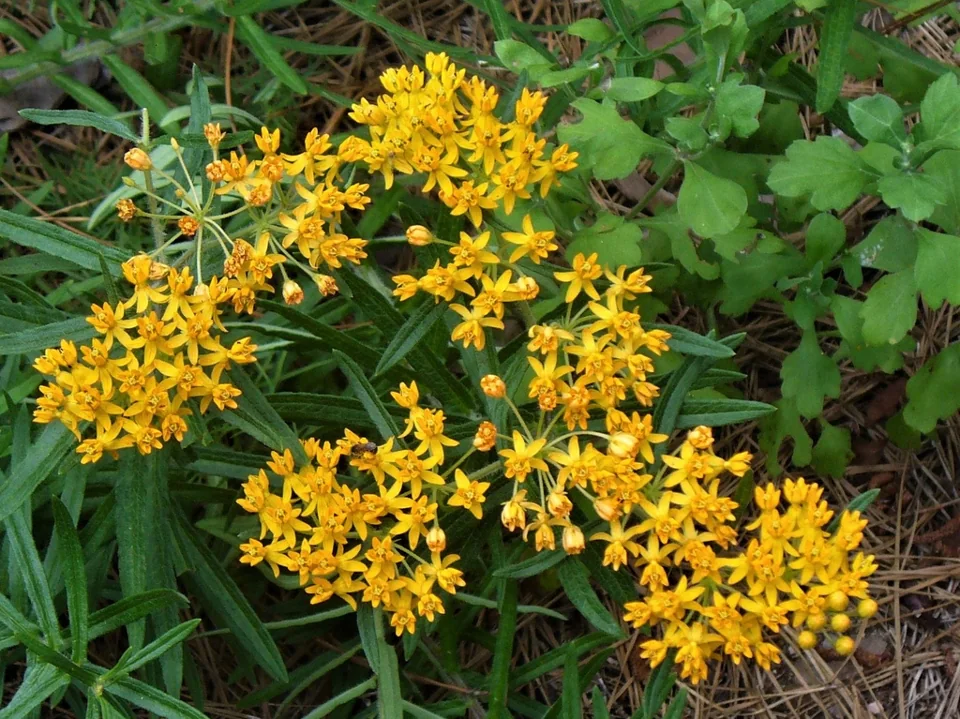
- Asclepias tuberosa — Butterfly weed: Orange summer flowers above a compact root system; a host plant where locally appropriate.
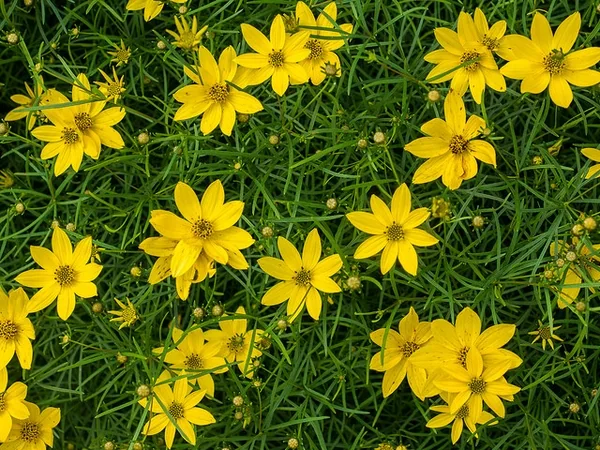
- Coreopsis verticillata — Threadleaf coreopsis: Fine leaves and yellow flowers create a light-textured middle layer.
Reference photographs show plants from the linked source profile; they do not document this illustrative bed as a built garden. Named cultivars need their own dimension check.
Keep the practical work together
Milkweed can support locally occurring caterpillars. Feeding damage is part of that purpose; do not promise untouched ornamental foliage. Check the botanical species and household exposure before selecting a milkweed.
Add this direction to your garden project to open its editable drawing, use the actual bed area for materials and price its planting quantities locally. Existing personal references and notes are kept.
A first season and a smaller start
Spring emergence is followed by summer flowering and later grass colour. Seed heads can provide winter structure; the planting is not evergreen.
Trial one grass, one milkweed and one coreopsis at the full allocated spacings. Keep access around that group before expanding.
Use establishment observations to decide the next phase. Buying extra plants to close first-year gaps changes the mature layout and care commitment.
Make this idea yours.
Start with one planting zone and a clear route. Measure the actual space, keep maintenance access and check the plants for your local conditions before expanding.
Your starting project notes
Garden project direction: A sunny prairie starter, with room for mature clumps. Repeat an upright grass, a flowering middle and a low front group. Use a small trial to learn the site before turning the whole garden into a meadow. Site checks: Sun · dry-to-medium draining soil · 6 × 3.3 m bed plus external access. Care: moderate. I want to keep the element that fits my space and simplify the rest. Before buying or building, agree the local plant suitability, dimensions, access, water supply, permissions, cost and maintenance. Reference: https://gardenideasnow.com/ideas/sunny-prairie-starter-border/
Keep the assumptions visible
Sources & checks
The layout and calculations are original illustrative examples. Horticultural and access guidance is informed by the sources below, checked on 3 October 2026. Local conditions still determine suitability.
- NC State: Schizachyrium scoparium — dimensions, growing conditions and care
- NC State: Asclepias tuberosa — dimensions, growing conditions and care
- NC State: Coreopsis verticillata — dimensions, growing conditions and care
These examples do not imply an on-site assessment or professional approval. Read our editorial approach.