Keep the need for moisture visible while combining three upright flowering groups. This is planting for an observed moist site, not a way to repair drainage. The original measured example shows where the starting plants go and what to check before extending the idea.
Use the site requirements before the picture
Sun to part shade · reliably moist draining soil · 6 × 3 m bed plus external access. A cold zone is only one check: inspect soil, heat, summer water and mature access too. The drawing’s top is a viewing edge, not a north arrow.
The drawing has no water inlet, overflow, infiltration test or pond-depth specification. Investigate standing water separately. Do not direct roof runoff into this bed on the strength of a planting illustration.
Read the measured planting arrangement
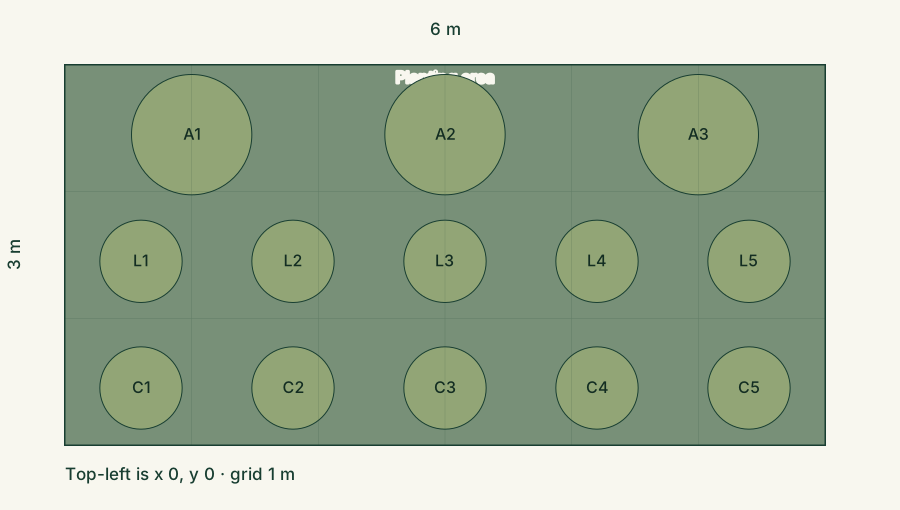
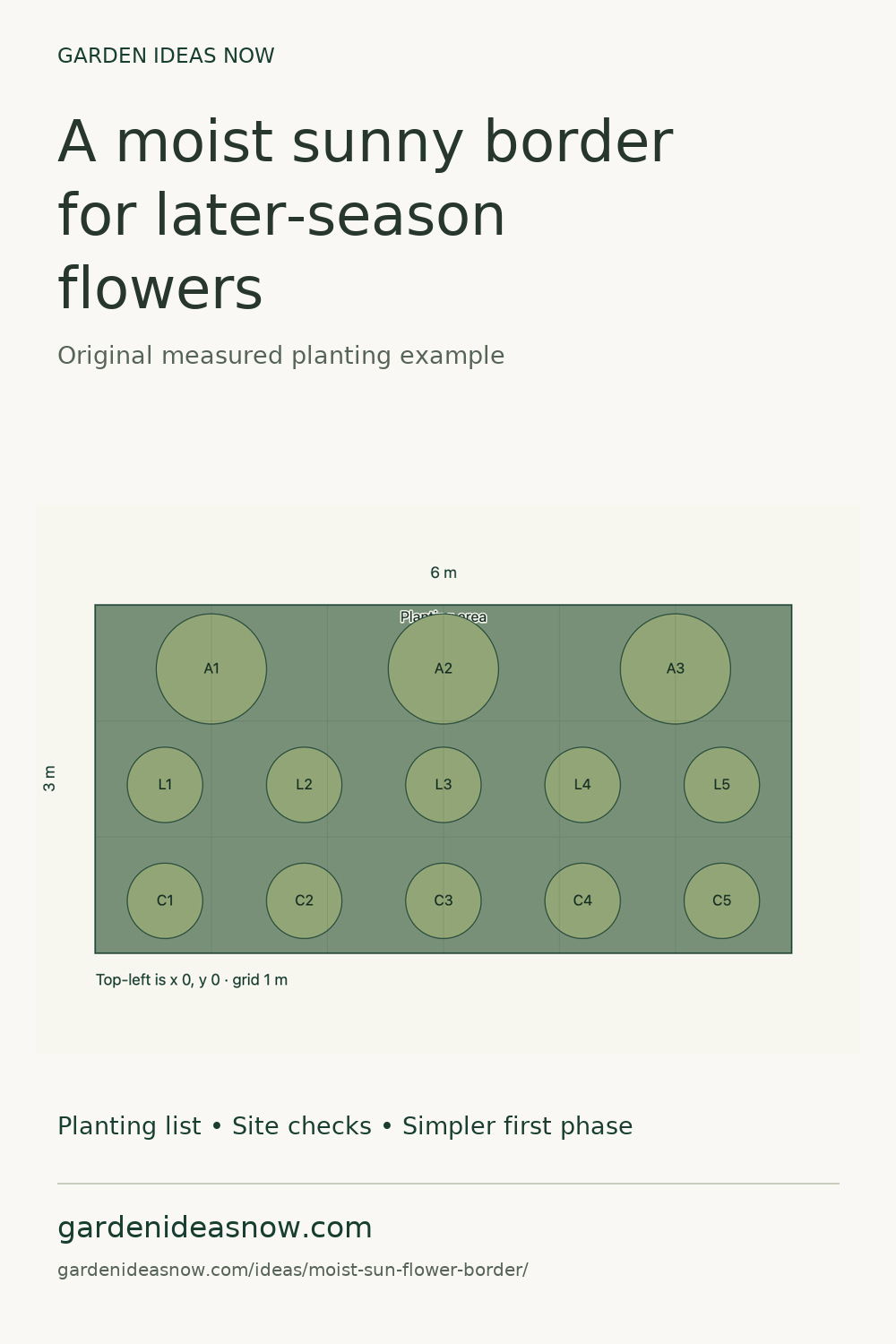
The worked bed is 6 × 3 m. Maintenance access is additional. Every plant is stored as a separate object with a botanical name, position and reserved diameter.
Three milkweeds sit behind five cardinal flowers and five turtleheads. Flower stems may be taller than their foliage, and the source’s taller cardinal-flower range is kept in the profile. Trial the sightline from the real viewing point.
Choose the actual species
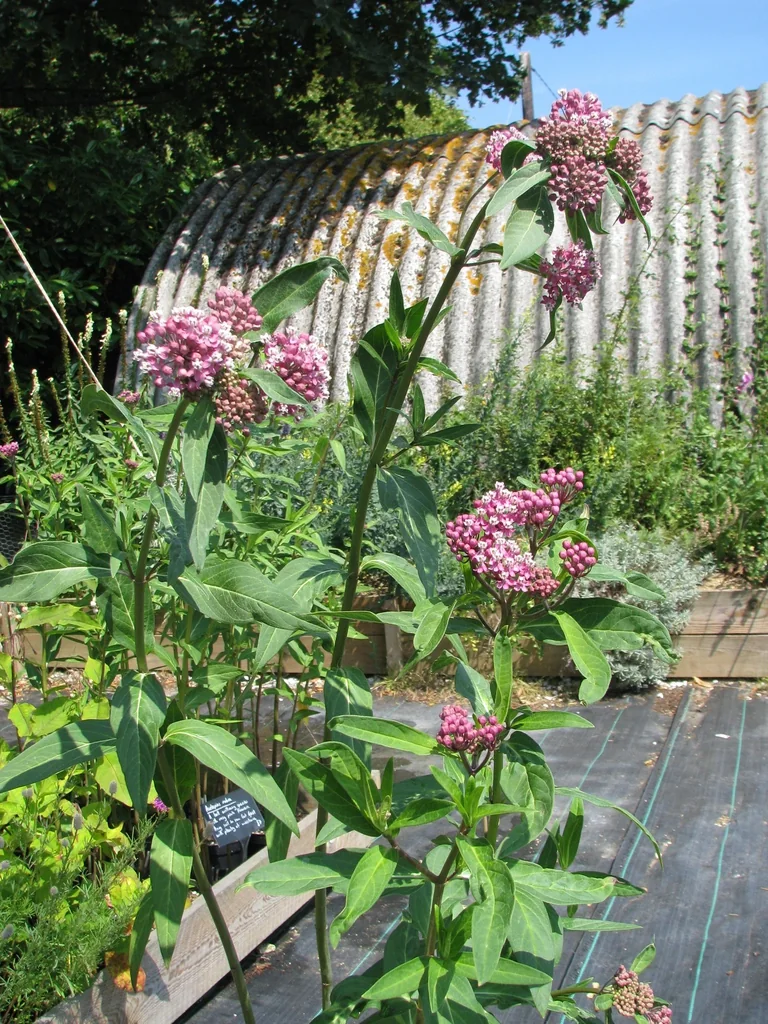
- Asclepias incarnata — Swamp milkweed: A tall summer-flowering layer for a reliably moist planting.
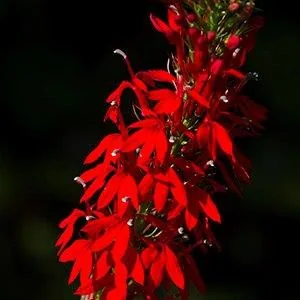
- Lobelia cardinalis — Cardinal flower: Tall red late-season flower spikes for a moist border.
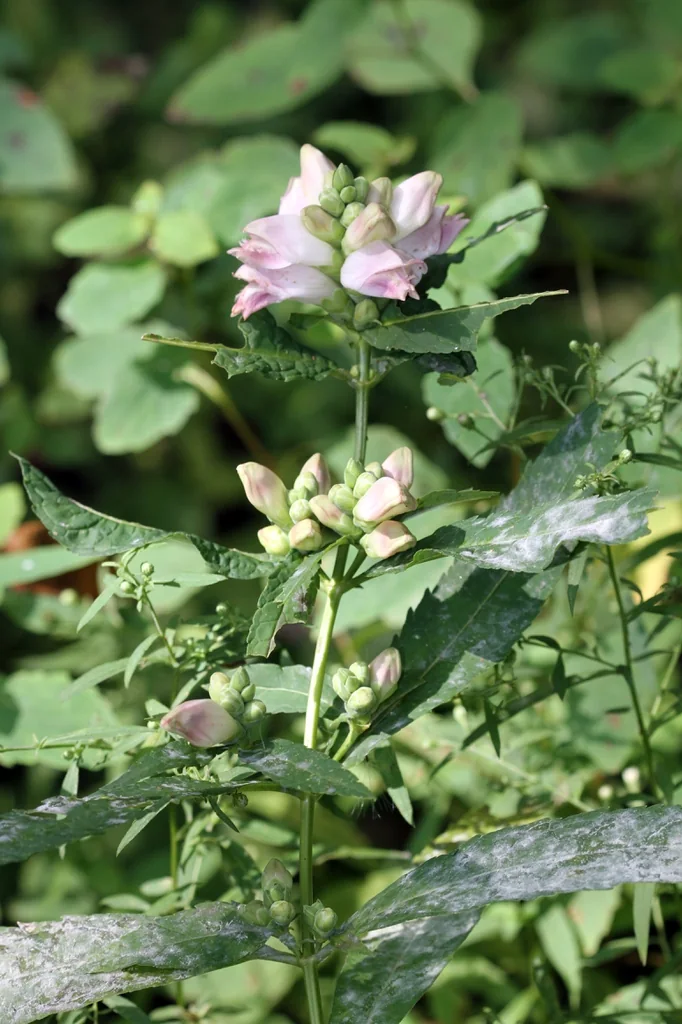
- Chelone glabra — White turtlehead: Upright pale late-season flowers for a moisture-dependent middle layer.
Reference photographs show plants from the linked source profile; they do not document this illustrative bed as a built garden. Named cultivars need their own dimension check.
Keep the practical work together
Cardinal flower should not dry out. Keep a reachable edge and a workable watering arrangement; reject this palette if absence care cannot be provided. Confirm plant identity and source-flagged harmful-exposure concerns.
Add this direction to your garden project to open its editable drawing, use the actual bed area for materials and price its planting quantities locally. Existing personal references and notes are kept.
A first season and a smaller start
Late summer and autumn are the main flower period. Spring can look open, and dormant stems are not a permanent screen.
Trial one reachable moist section and observe a dry spell before repeating the combination. A single compatible species is easier to learn than thirteen new plants.
Use establishment observations to decide the next phase. Buying extra plants to close first-year gaps changes the mature layout and care commitment.
Make this idea yours.
Start with one planting zone and a clear route. Measure the actual space, keep maintenance access and check the plants for your local conditions before expanding.
Your starting project notes
Garden project direction: A moist sunny border for later-season flowers. Keep the need for moisture visible while combining three upright flowering groups. This is planting for an observed moist site, not a way to repair drainage. Site checks: Sun to part shade · reliably moist draining soil · 6 × 3 m bed plus external access. Care: high. I want to keep the element that fits my space and simplify the rest. Before buying or building, agree the local plant suitability, dimensions, access, water supply, permissions, cost and maintenance. Reference: https://gardenideasnow.com/ideas/moist-sun-flower-border/
Keep the assumptions visible
Sources & checks
The layout and calculations are original illustrative examples. Horticultural and access guidance is informed by the sources below, checked on 3 October 2026. Local conditions still determine suitability.
- NC State: Asclepias incarnata — dimensions, growing conditions and care
- NC State: Lobelia cardinalis — dimensions, growing conditions and care
- NC State: Chelone glabra — dimensions, growing conditions and care
These examples do not imply an on-site assessment or professional approval. Read our editorial approach.