This low border is for a view you pass in spring: an entrance edge, a window or a path beside an existing bed. Its purpose is a readable early display without a shrub blocking the view. The two planting layers remain deliberately separate while you learn how quickly the groundcover expands.
Choose the display and the site together
Use this example where the soil drains and you can water new plants while they establish. Occasional dryness later is different from a bed threaded with large tree roots and almost no available water. Observe the site through its dry period before treating it as suitable. Protect existing roots and avoid excavation that could damage a tree.
Choose this low spring edge if an unobstructed view matters. Choose the fern-led dry-shade plan if persistent foliage structure matters more than flowers. Choose the foamflower plan for reliably moist ground and a softer, pale spring display. None is an answer to permanent saturation.
Read the measured planting plan
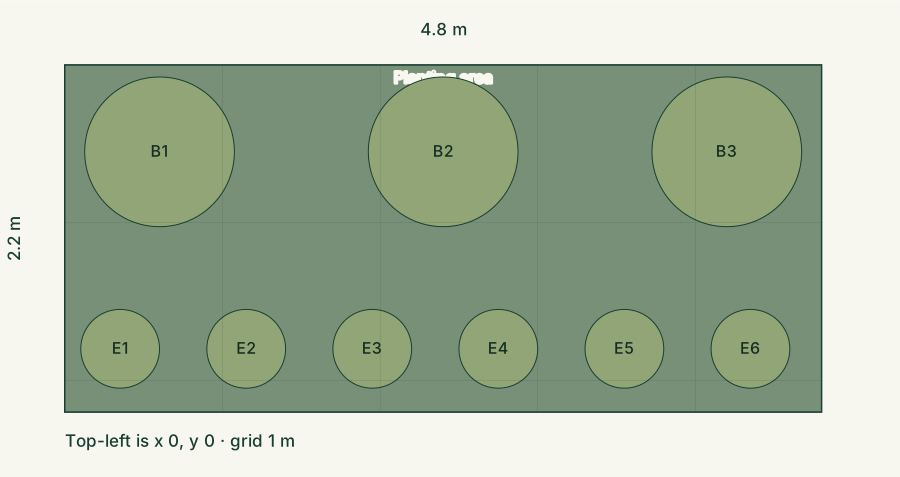
The outline is 4.8 × 2.2 m: 10.56 m². Planting beds occupy 10.56 m². The top is the visual rear, not a compass bearing. Paths outside the outline are additional space. Test reach and maintenance access before copying it; widen access or divide deep beds where needed.
Circles reserve adult spread, not the size of a new nursery pot. Gaps are deliberate. Soil and neighbouring growth can change the eventual size, so check the named plants and keep the ability to edit the scheme. The diagram is an original concept, not an installed garden.
Open this layout in the planner, choose “Use this example,” then edit positions and dimensions. Its current plant inventory follows additions and deletions. Export the editable plan as well as the drawing.
Use two layers with different jobs
The three bergenias make the broad-leaf background; six named epimediums form the lower spring-flowering layer. This cultivar is specified because its growth and seasonal character matter. Do not order an unnamed substitute and assume the same envelope. See bergenia crassifolia, epimedium x versicolor sulphureum.
The design reserves 0.95 m circles for bergenia and 0.5 m for the first epimedium clumps. Those circles describe starting allocations for mature clumps, not a permanent boundary for a spreading colony. Leave the open strip between the rows visible while establishing. If weeds make the gaps impractical, use an appropriate temporary soil covering rather than doubling the permanent plant count.
Shopping list and exact positions
| Plant | Count | Diameter each |
|---|---|---|
| Bergenia crassifolia | 3 | 0.95 m |
| Epimedium × versicolor ‘Sulphureum’ | 6 | 0.5 m |
Total: 9 individual planting positions. Open each profile for source-backed size, light, moisture, climate and safety checks. A botanical match alone does not establish local native status or suitability.
Show centre coordinates for setting out
Measure x from the left and y from the top. All coordinates are metres. Plant labels match the diagram.
| Label | Centre x | Centre y |
|---|---|---|
| B1 | 0.6 | 0.55 |
| B2 | 2.4 | 0.55 |
| B3 | 4.2 | 0.55 |
| E1 | 0.35 | 1.8 |
| E2 | 1.15 | 1.8 |
| E3 | 1.95 | 1.8 |
| E4 | 2.75 | 1.8 |
| E5 | 3.55 | 1.8 |
| E6 | 4.35 | 1.8 |
Set out empty pots or temporary markers first. Check views, access and the mature circles before planting. For a compatible material applied at an illustrative 5 cm depth, the full bed area would be 528 litres before subtracting obstructions and crown clearances. This is geometry, not a prescribed mulch type or depth for every plant. Calculate your actual material and depth.
Read the whole year before buying
Spring: the flowers and new leaves are the reason to choose this plan. Summer: the edge becomes mainly a comparison of leaf shapes; there is no promised second flower show. Autumn: observe the leaf response in your own conditions. Winter: leaf retention and condition depend on climate. Keep the path and border outline attractive when foliage is damaged or sparse.
If summer flowers are essential, this is the wrong primary scheme. Compare the moist summer border and its higher water commitment. Adding astilbes to this periodically dry plan would create a conflicting care requirement, so change the whole brief rather than treating them as a decorative replacement.
Establish, then control the advancing edge
Before planting, mark the circles and the maintenance approach with empty pots. Confirm that the background does not obscure the view you are preserving. Inspect each root ball after planting and during demanding weather; keep a record of where the bed dries first. A species described as drought tolerant still needs an establishment plan.
After the first full season, draw the actual groundcover edge over the original plan. Keep access to separate unwanted expansion from the bergenia crowns. Work to the species-specific timing in the profiles. Retain a narrow inspection space where the two groups meet if their merging makes care difficult.
Substitute by purpose, then redraw
If yellow is unsuitable but the growing conditions are sound, retain the geometry while researching an exact alternative with the required light, moisture, mature spread and flowering window. A different epimedium cultivar needs its own verified dimensions; colour alone is insufficient. Keep the existing choice until that check is complete.
If the site stays consistently moist, the linked foamflower design offers a fully specified alternative, with a different spring colour and spreading habit. If the site proves too dry even for establishment, reduce planted area and investigate the cause rather than repeatedly replacing plants. Save the observed failure and revised choice in the notebook before creating a new shopping list.
Keep the assumptions visible
Sources & checks
The layout and calculations are original illustrative examples. Horticultural and access guidance is informed by the sources below, checked on 8 October 2026. Local conditions still determine suitability.
- RHS: planning a border from conditions and mature plant size
- NC State Extension Gardener Plant Toolbox: Bergenia crassifolia — dimensions and conditions
- NC State Extension Gardener Plant Toolbox: Epimedium × versicolor ‘Sulphureum’ — dimensions and conditions
These examples do not imply an on-site assessment or professional approval. Read our editorial approach.