perennial · design plant record
Asclepias tuberosa
Butterfly weed
Orange summer flowers above a compact root system; a host plant where locally appropriate.
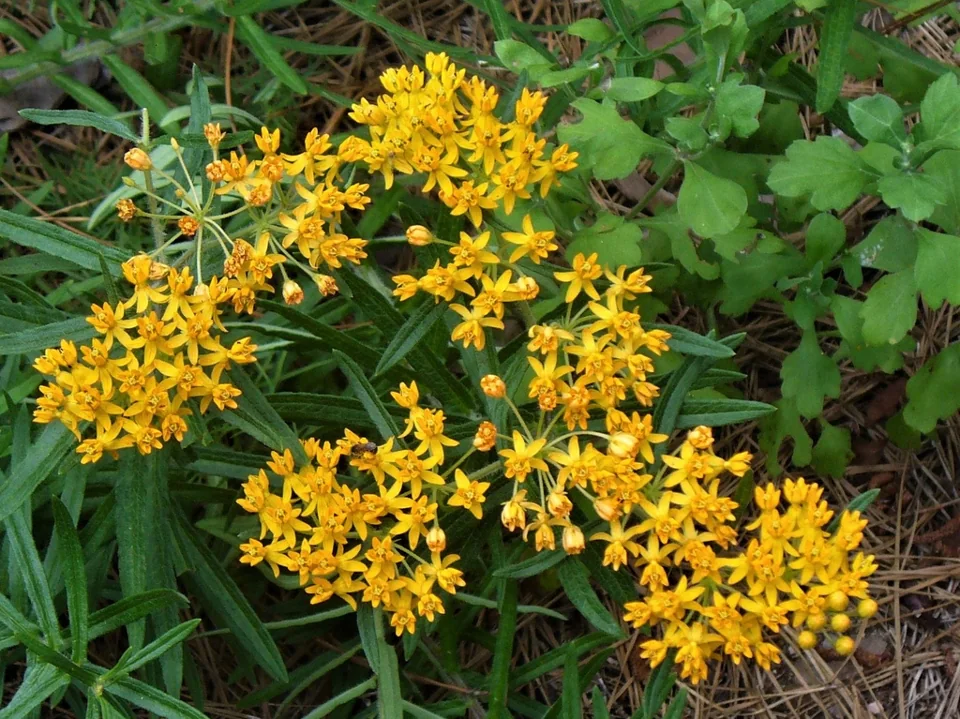
Photo: Susan Strine · CC BY 2.0 · Source & caption
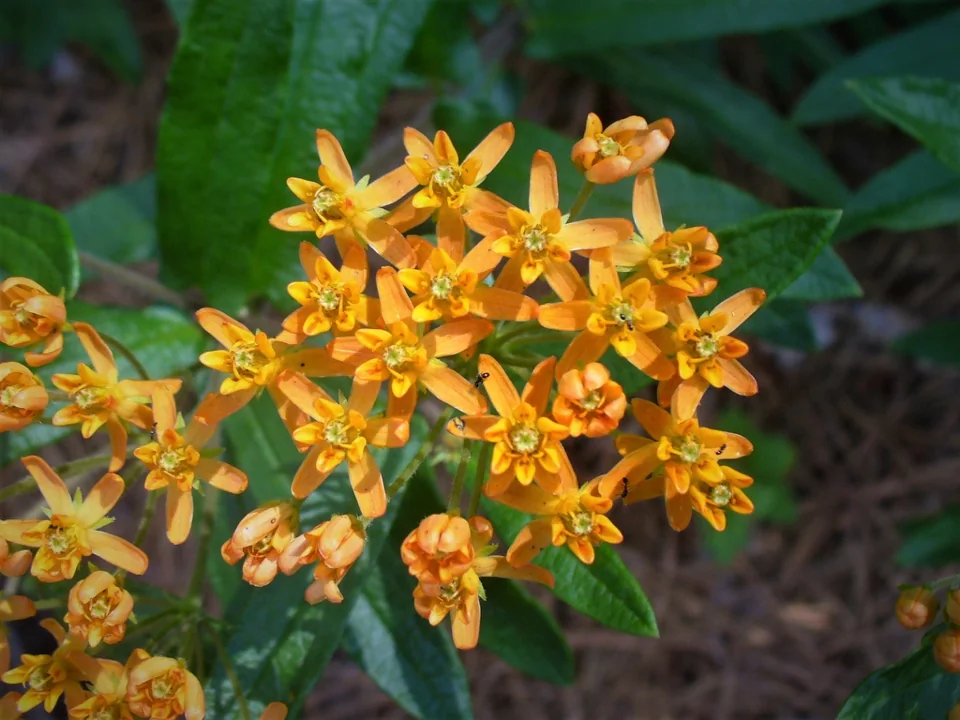
Photo: Susan Strine · CC BY 2.0 · Source & caption
Photographs show the source plant or captioned cultivar, season and setting. They do not document one of our illustrative garden layouts as a built project.
- Height at maturity
- 0.3–0.91 m (1–3 ft)
- Spread at maturity
- 0.3–0.46 m (1–1.5 ft)
- Light
- Sun / Part shade
- Moisture
- Drier soil after establishment / Moist, draining soil
- Source-reported USDA zones
- 3–9 · verify subzone and cultivar
- Principal seasonal role
- Spring, Summer
Fit it to the site
Lean, draining soil; sun is the reliable flowering choice.
Reject persistently wet soil. Source prose reaches 3 ft high, above the 2 ft structured field; the larger height is retained.
Keep the care in the decision
Avoid disturbing the taproot. Allow establishment time and decide whether to retain seed pods; caterpillar feeding is part of its host-plant role.
Origin & safety checks
Eastern and southern United States. Confirm local native range and restrictions.
The source flags poisonous parts or harmful exposure. Check the exact plant and household exposure before purchase; no edible or pet-safe use is inferred.
Check current invasive restrictions with your local plant-health or extension authority. For pets, use the exact botanical name in a veterinary toxicity reference; for potential ingestion or exposure, get appropriate professional advice rather than relying on a design guide.
Factual source · checked 15 October 2026
NC State Extension Gardener Plant Toolbox: Asclepias tuberosa
Ranges are rounded metric conversions of the source's dimensions. Growth varies with cultivar and conditions. Reference photographs and source captions help you inspect the plant; they do not certify identity. Our concept garden images cannot establish botanical identity.
See this plant in a measured design
- A sunny prairie starter, with room for mature clumps — Sun · dry-to-medium draining soil · 6 × 3.3 m bed plus external access.
These layouts show the plant’s allocated space and neighbours. Each plan still needs a local site check.