Build a shaded edge from fern structure, broader leaves and a low sedge rhythm. Match the climate and local species restrictions before copying the palette. The original measured example shows where the starting plants go and what to check before extending the idea.
Use the site requirements before the picture
Partial shade · moist draining organic soil · 4.8 × 2.4 m bed plus external access. A cold zone is only one check: inspect soil, heat, summer water and mature access too. The drawing’s top is a viewing edge, not a north arrow.
Autumn fern starts at USDA6b in the linked source and can naturalize or be invasive in some regions. If it is unsuitable locally, retain the spatial idea and redraw the palette; do not silently substitute a different fern.
Read the measured planting arrangement
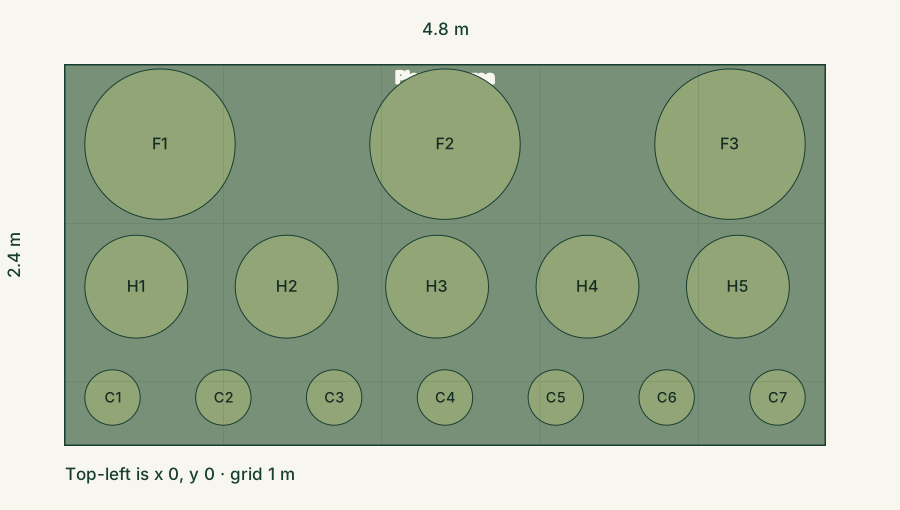
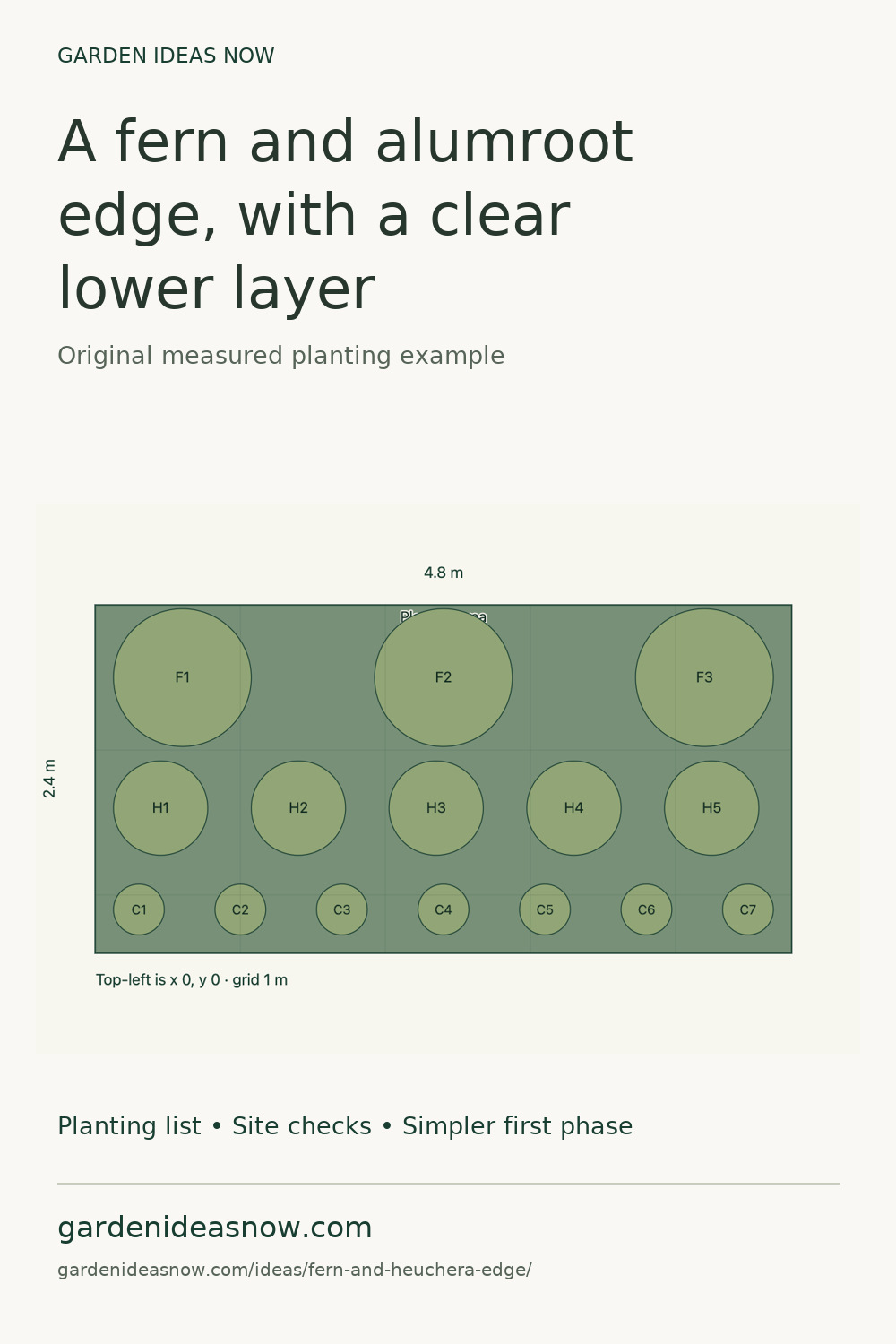
The worked bed is 4.8 × 2.4 m. Maintenance access is additional. Every plant is stored as a separate object with a botanical name, position and reserved diameter.
Five alumroots sit between the large ferns and the low sedge edge. Their fine flower stems can rise well above the leaf mound; the source height range includes more than the outline of the foliage.
Choose the actual species
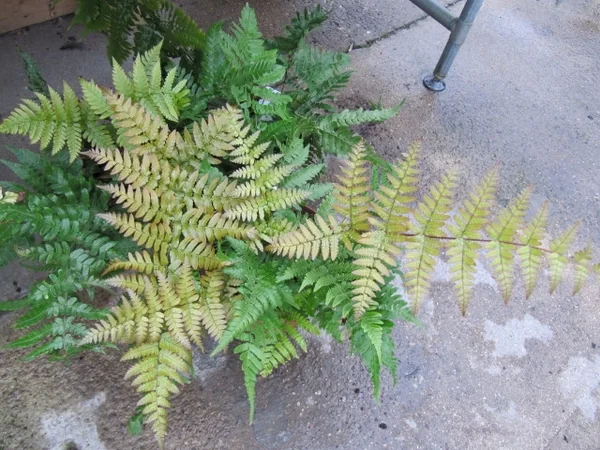
- Dryopteris erythrosora — Autumn fern: Copper-toned young fronds followed by a broader green fern framework.
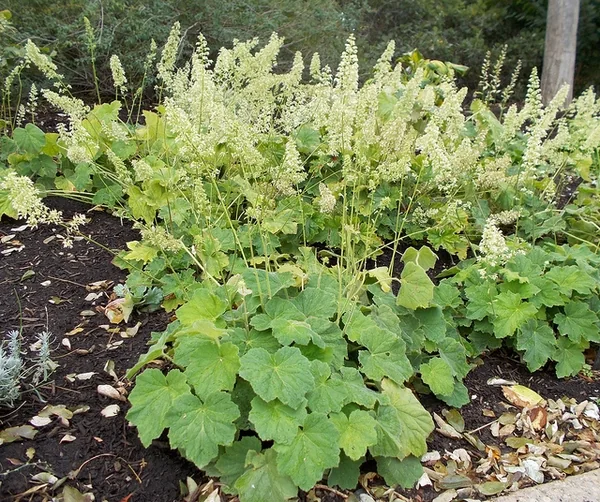
- Heuchera villosa — Hairy alumroot: Broad leaves and fine flowering stems for a generous shaded edge.
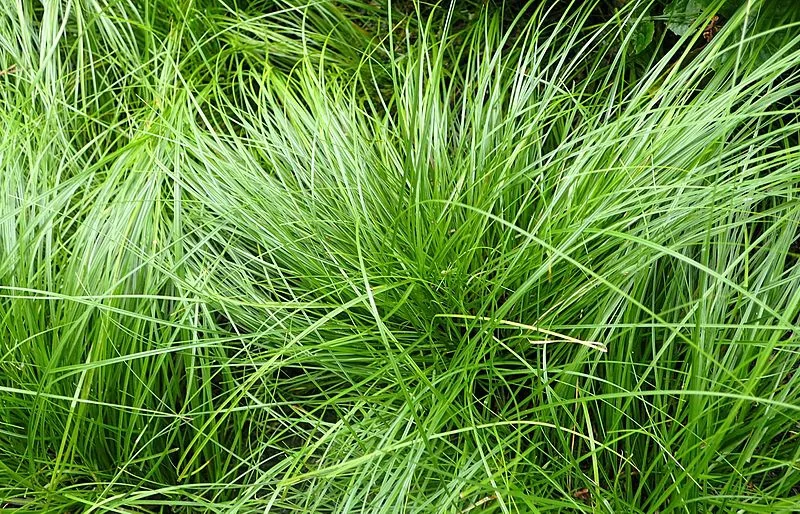
- Carex pensylvanica — Pennsylvania sedge: A low spreading ground layer for dry to moist shade.
Reference photographs show plants from the linked source profile; they do not document this illustrative bed as a built garden. Named cultivars need their own dimension check.
Keep the practical work together
Seven sedges are starting clumps, not permanent isolated dots. Keep a defined edge for editing, and let the first season have gaps while the plants establish.
Add this direction to your garden project to open its editable drawing, use the actual bed area for materials and price its planting quantities locally. Existing personal references and notes are kept.
A first season and a smaller start
Young fern colour and spring growth lead into summer foliage. Evergreen performance and winter leaves depend on the local climate; no winter flower display is promised.
Try one fern after local-status checks, one alumroot and a short sedge section. Watch moisture and growth before repeating the full edge.
Use establishment observations to decide the next phase. Buying extra plants to close first-year gaps changes the mature layout and care commitment.
Make this idea yours.
Start with one planting zone and a clear route. Measure the actual space, keep maintenance access and check the plants for your local conditions before expanding.
Your starting project notes
Garden project direction: A fern and alumroot edge, with a clear lower layer. Build a shaded edge from fern structure, broader leaves and a low sedge rhythm. Match the climate and local species restrictions before copying the palette. Site checks: Partial shade · moist draining organic soil · 4.8 × 2.4 m bed plus external access. Care: moderate. I want to keep the element that fits my space and simplify the rest. Before buying or building, agree the local plant suitability, dimensions, access, water supply, permissions, cost and maintenance. Reference: https://gardenideasnow.com/ideas/fern-and-heuchera-edge/
Keep the assumptions visible
Sources & checks
The layout and calculations are original illustrative examples. Horticultural and access guidance is informed by the sources below, checked on 3 October 2026. Local conditions still determine suitability.
- NC State: Dryopteris erythrosora — dimensions, growing conditions and care
- NC State: Heuchera villosa — dimensions, growing conditions and care
- NC State: Carex pensylvanica — dimensions, growing conditions and care
These examples do not imply an on-site assessment or professional approval. Read our editorial approach.