edible · design plant record
Salvia officinalis
Culinary sage
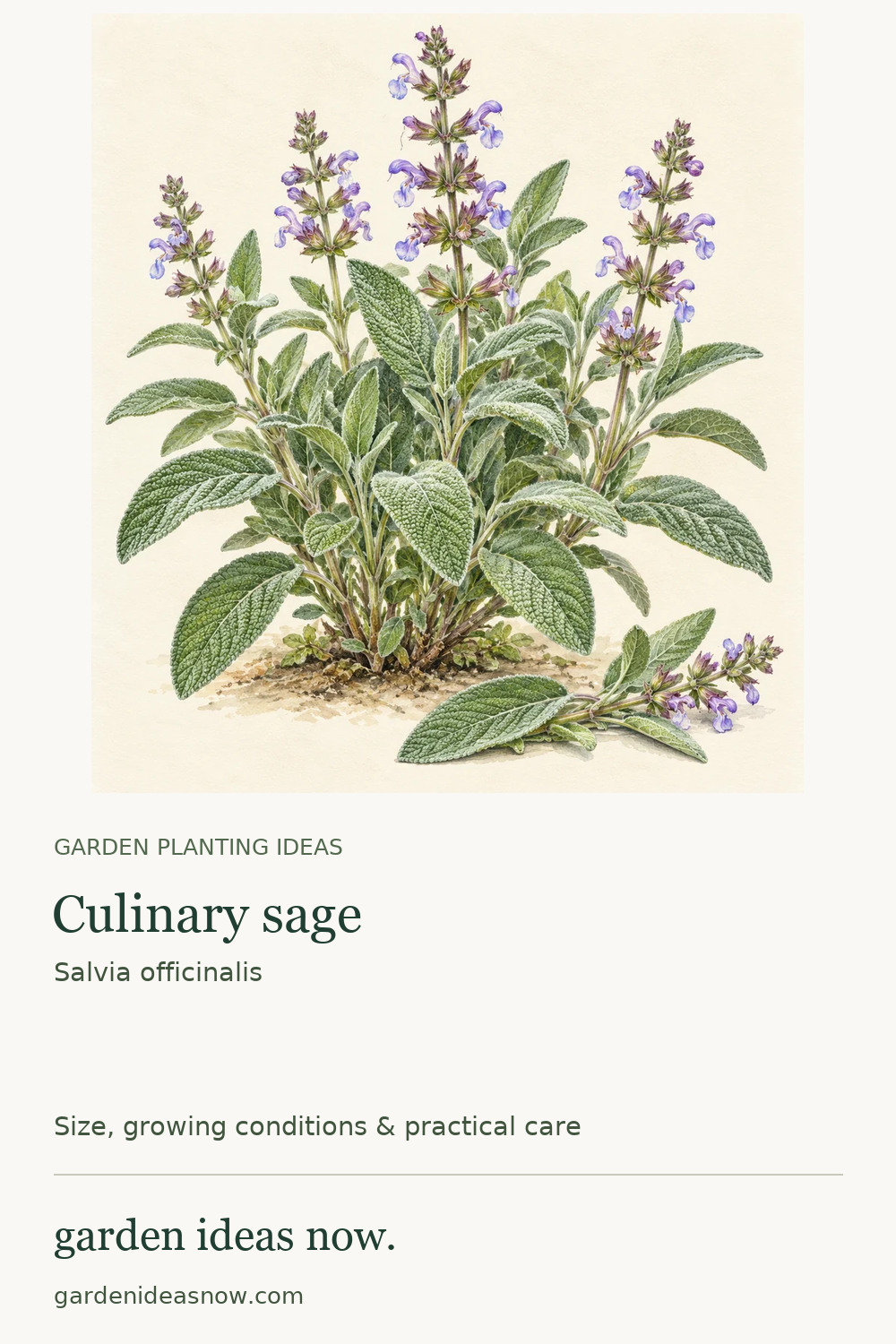
Grey leaves and violet flowers combine in a sunny herb edge.
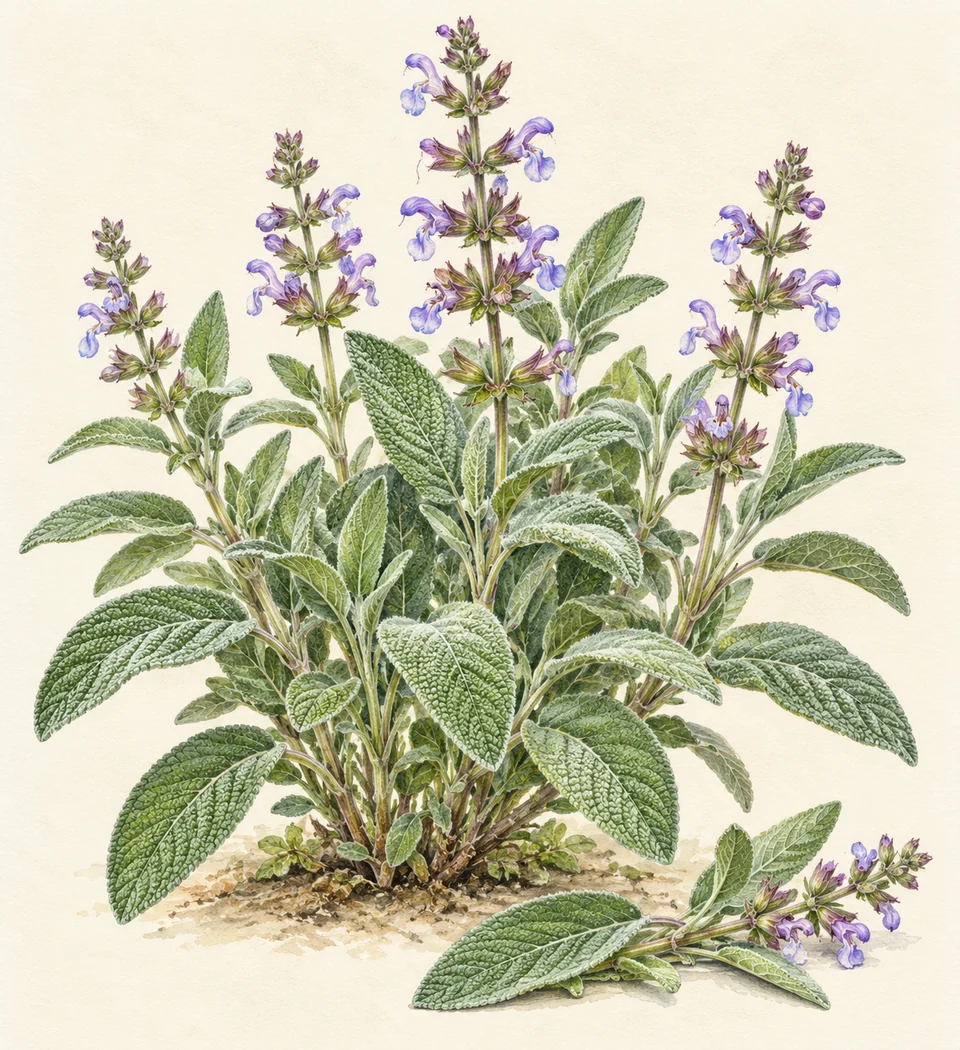
Illustration: Garden Ideas Now
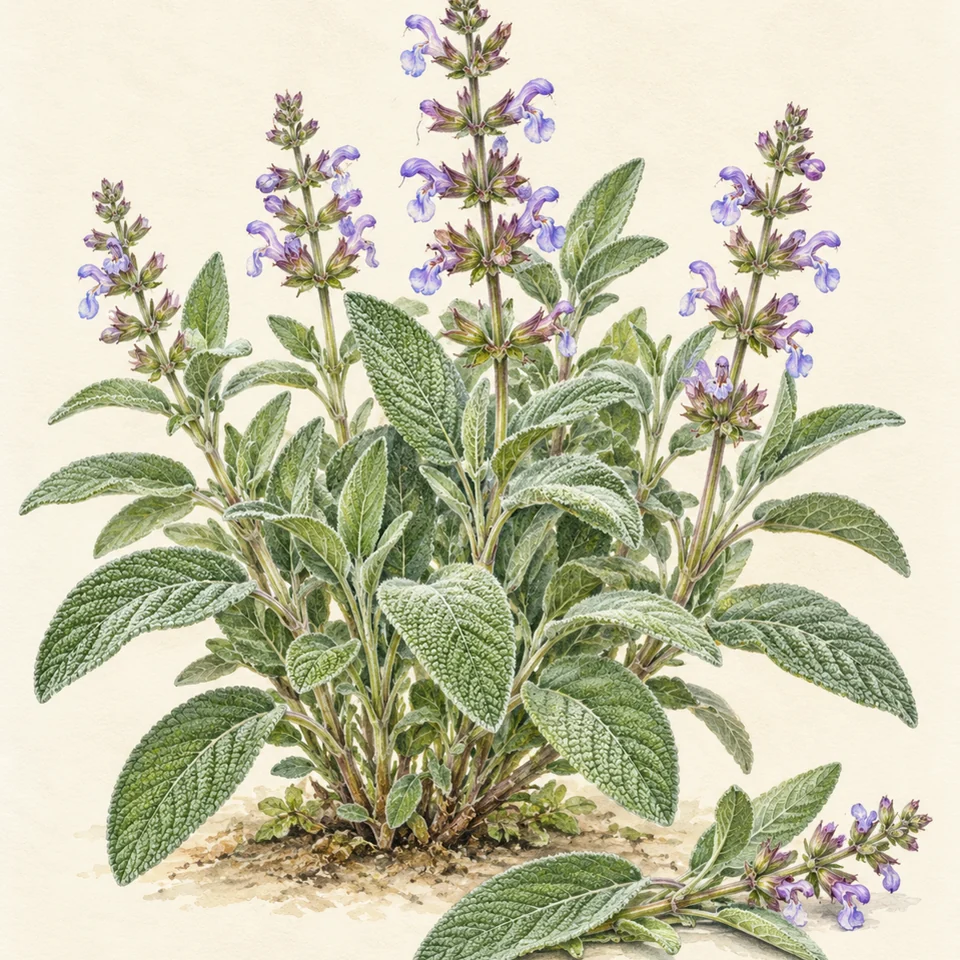
Illustration: Garden Ideas Now · Detail from the same illustration
Illustrations show a representative form; the detail view is a crop of the same artwork. Use the named factual source and exact cultivar for identification and purchase checks.
- Height at maturity
- 0.3–0.61 m (1–2 ft)
- Spread at maturity
- 0.61–0.91 m (2–3 ft)
- Light
- Sun / Part shade
- Moisture
- Drier soil after establishment / Moist, draining soil
- Source-reported USDA zones
- 4–8 · verify subzone and cultivar
- Principal seasonal role
- Summer
Fit it to the site
A warm, draining soil that can dry between watering.
Culinary identity does not make concentrated preparations or all ornamental sages safe.
Keep the care in the decision
Trim lightly after flowering and replace woody, declining plants as needed.
Origin & safety checks
Northern Mediterranean. Confirm local native range and restrictions.
Confirm edible identity and plant parts before use. Species, cultivar, sprays, allergies and pet exposure need separate checks; seeds and foliage are not automatically edible.
Check current invasive restrictions with your local plant-health or extension authority. For pets, use the exact botanical name in a veterinary toxicity reference; for potential ingestion or exposure, get appropriate professional advice rather than relying on a design guide.
Factual source · checked 18 October 2026
NC State Extension Gardener Plant Toolbox: Salvia officinalis
Ranges are rounded metric conversions of the source's dimensions. Growth varies with cultivar and conditions. Illustrations help you compare form and character; they do not certify botanical identity. Check the exact plant and cultivar before purchase.