perennial · design plant record
Polygonatum biflorum
Solomon’s seal
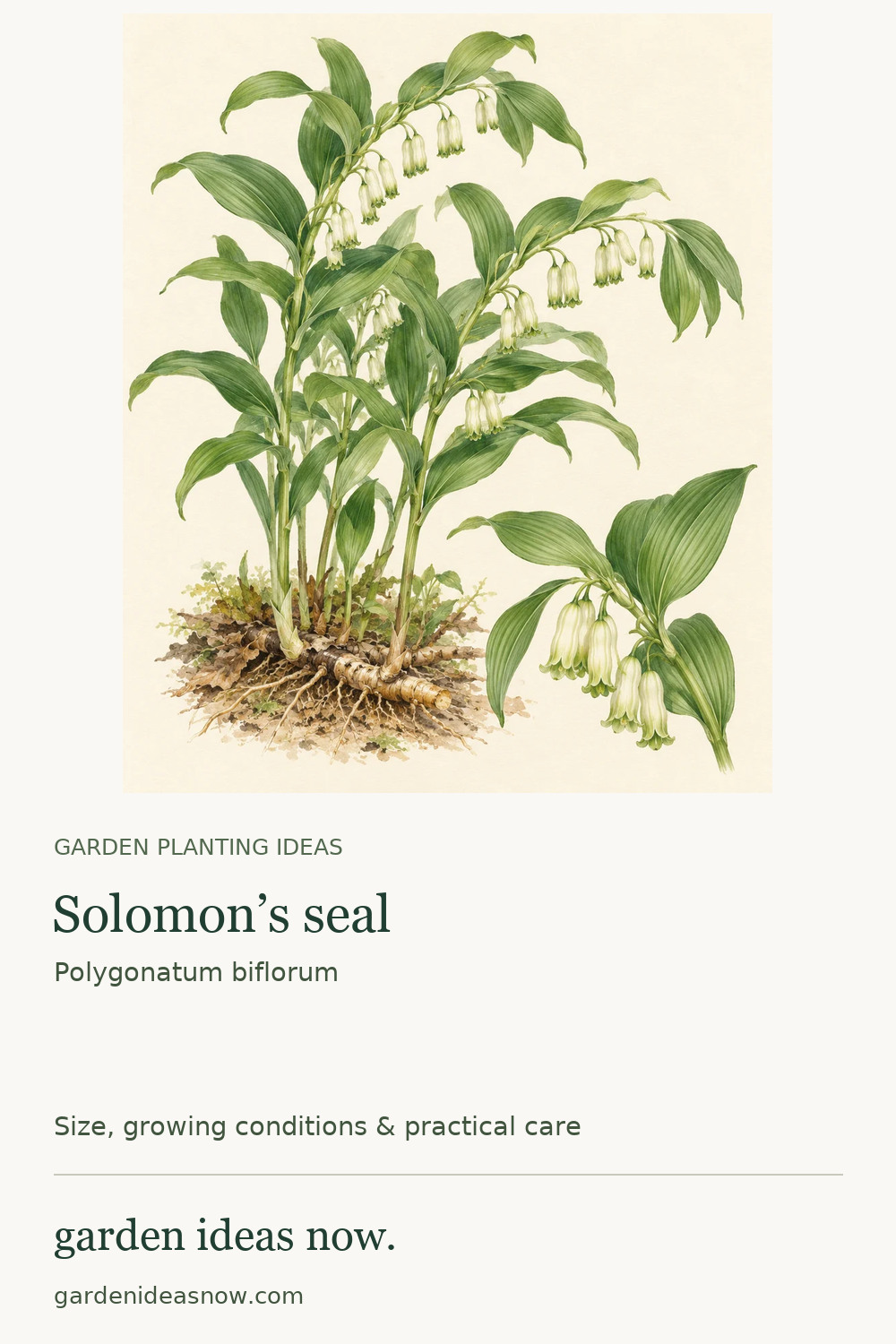
Arching stems carry hanging pale flowers in a woodland layer.
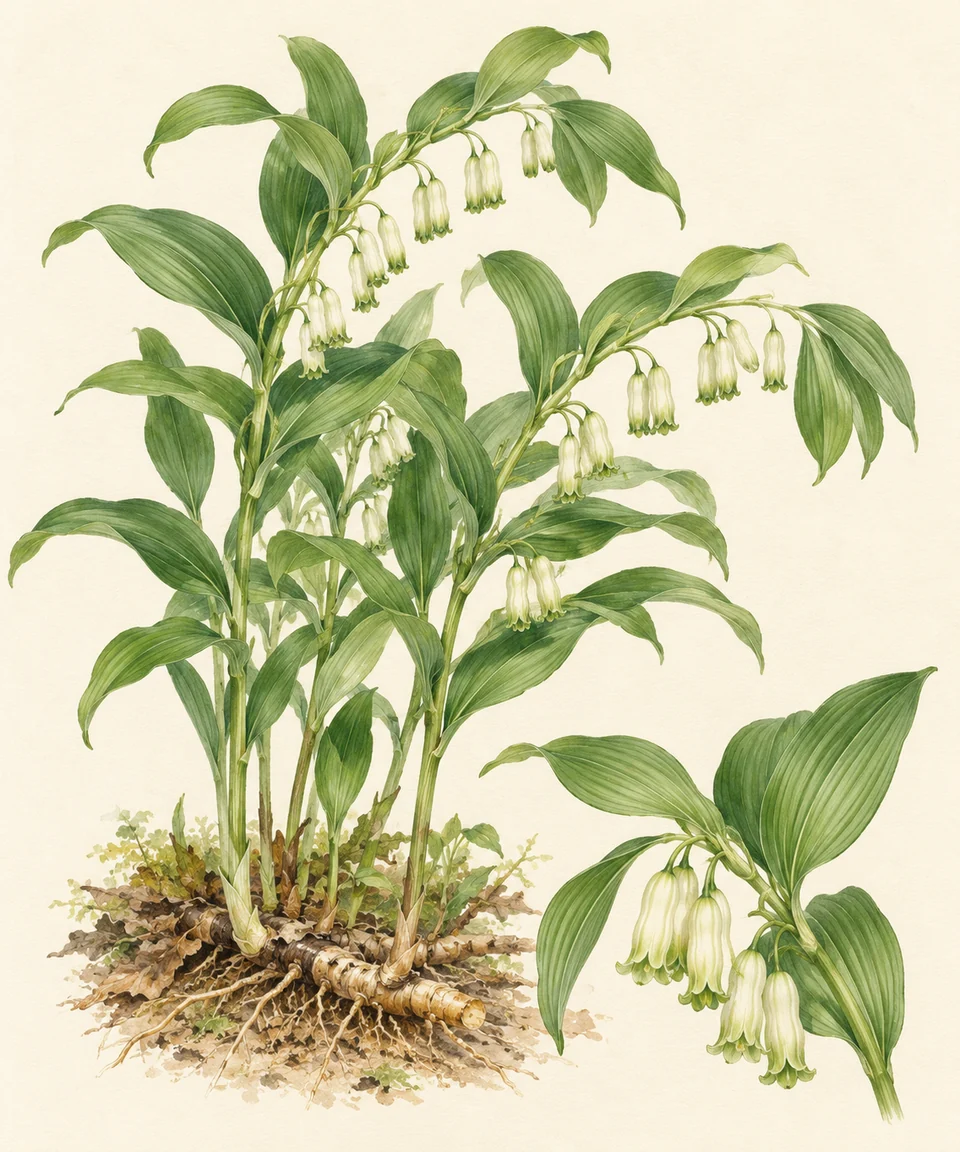
Illustration: Garden Ideas Now
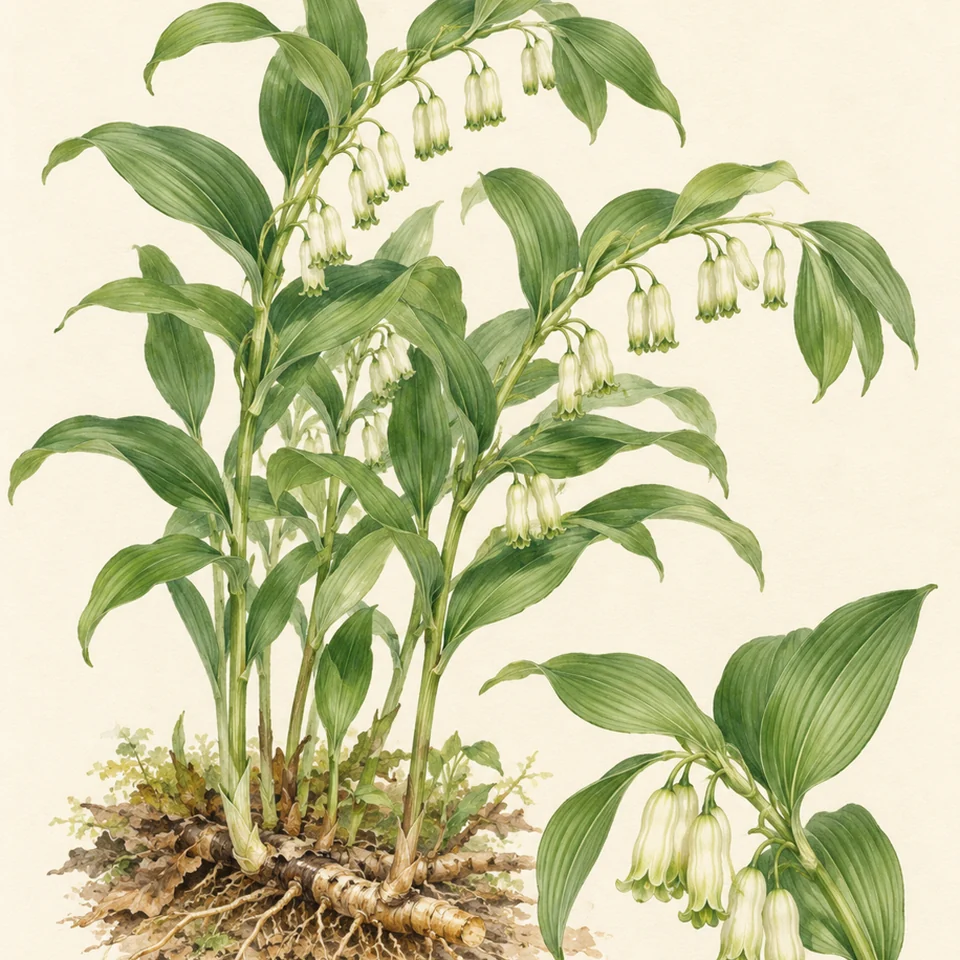
Illustration: Garden Ideas Now · Detail from the same illustration
Illustrations show a representative form; the detail view is a crop of the same artwork. Use the named factual source and exact cultivar for identification and purchase checks.
- Height at maturity
- 0.91–1.83 m (3–6 ft)
- Spread at maturity
- 0.61–1.22 m (2–4 ft)
- Light
- Part shade / Shade
- Moisture
- Drier soil after establishment / Moist, draining soil
- Source-reported USDA zones
- 3–9 · verify subzone and cultivar
- Principal seasonal role
- Spring
Fit it to the site
Moist, draining soil; established plants can tolerate some dryness.
Berries are not food; allow for seasonal dieback.
Keep the care in the decision
Leave room for gradual rhizome spread and retain soil organic matter.
Origin & safety checks
Eastern North America, North Carolina. Confirm local native range and restrictions.
Not a toxicity assessment. Verify the exact plant and any edible part with an appropriate local authority; keep uncertain plants away from ingestion.
Check current invasive restrictions with your local plant-health or extension authority. For pets, use the exact botanical name in a veterinary toxicity reference; for potential ingestion or exposure, get appropriate professional advice rather than relying on a design guide.
Factual source · checked 18 October 2026
NC State Extension Gardener Plant Toolbox: Polygonatum biflorum
Ranges are rounded metric conversions of the source's dimensions. Growth varies with cultivar and conditions. Illustrations help you compare form and character; they do not certify botanical identity. Check the exact plant and cultivar before purchase.