shrub · design plant record
Physocarpus opulifolius
Common ninebark
A broad deciduous shrub for flowers, bark and cultivar-dependent foliage.
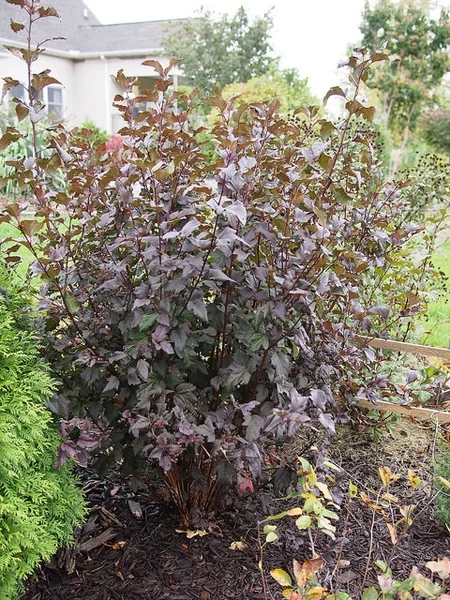
Photo: F. D. Richards · CC-BY-SA 2.0 · Source & caption
Photographs show the source plant or captioned cultivar, season and setting. They do not document one of our illustrative garden layouts as a built project.
- Height at maturity
- 1.52–2.44 m (5–8 ft)
- Spread at maturity
- 1.22–1.83 m (4–6 ft)
- Light
- Sun / Part shade
- Moisture
- Drier soil after establishment / Moist, draining soil
- Source-reported USDA zones
- 2–8 · verify subzone and cultivar
- Principal seasonal role
- Spring, Summer
Fit it to the site
Slightly acidic, draining soil in sun to partial shade.
Allow its actual width and local heat response. Monitor mildew rather than treating coloured leaves as the only choice criterion.
Keep the care in the decision
If pruning is needed, check timing after flowering; retain access for renewal rather than continual clipping.
Origin & safety checks
Central and eastern North America. Confirm local native range and restrictions.
Toxicity and pet safety are not assessed here. An ornamental record is not an edible-use recommendation.
Check current invasive restrictions with your local plant-health or extension authority. For pets, use the exact botanical name in a veterinary toxicity reference; for potential ingestion or exposure, get appropriate professional advice rather than relying on a design guide.
Factual source · checked 15 October 2026
NC State Extension Gardener Plant Toolbox: Physocarpus opulifolius
Ranges are rounded metric conversions of the source's dimensions. Growth varies with cultivar and conditions. Reference photographs and source captions help you inspect the plant; they do not certify identity. Our concept garden images cannot establish botanical identity.