tree · design plant record
Cercis canadensis
Eastern redbud
Spring flowers on bare branches with a spreading, heart-leaved summer canopy.
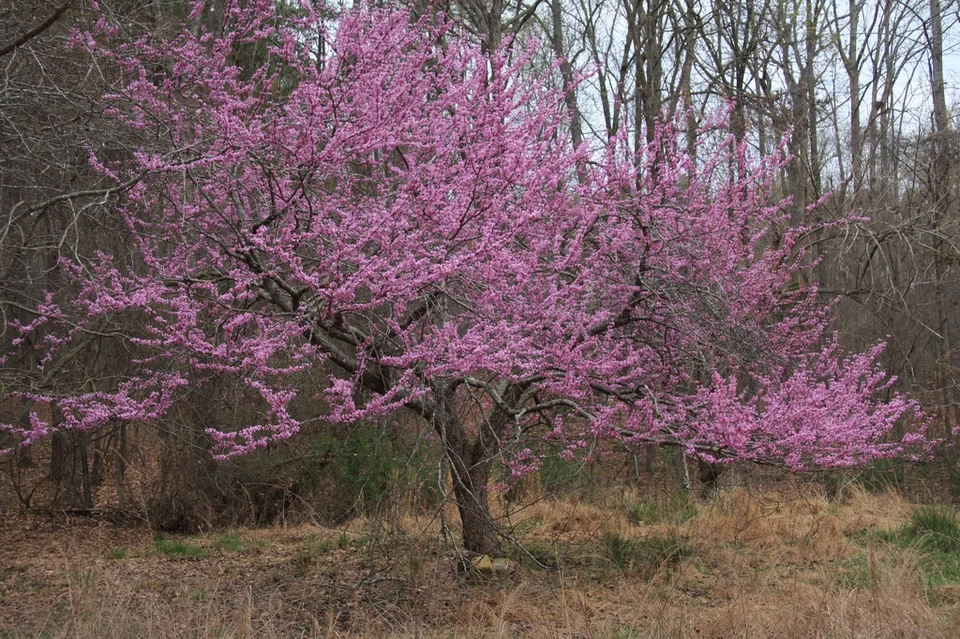
Photo: Dcrjsr · CC BY 3.0 · Source & caption
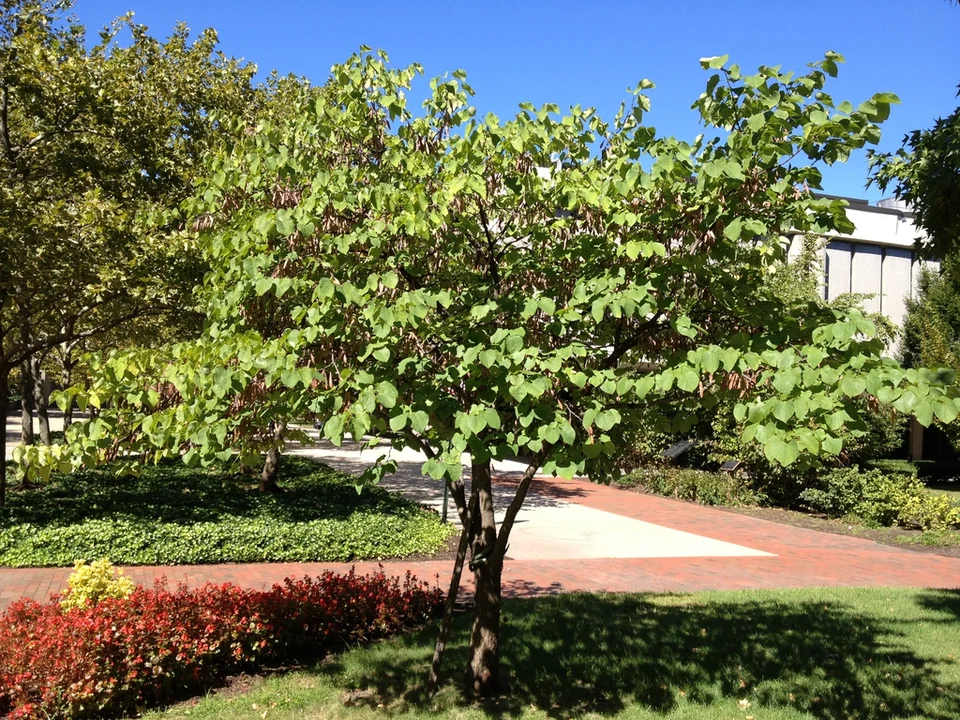
Photo: Lambique · CC BY-SA 3.0 · Source & caption
Photographs show the source plant or captioned cultivar, season and setting. They do not document one of our illustrative garden layouts as a built project.
- Height at maturity
- 6.1–9.14 m (20–30 ft)
- Spread at maturity
- 7.62–10.67 m (25–35 ft)
- Light
- Sun / Part shade
- Moisture
- Drier soil after establishment / Moist, draining soil
- Source-reported USDA zones
- 4–9 · verify subzone and cultivar
- Principal seasonal role
- Spring, Autumn
Fit it to the site
Moist, draining soil; site the mature canopy clear of routes.
A spreading tree, not a compact shrub: the source width can exceed 10 m.
Keep the care in the decision
Water during establishment and check locally important canker and wilt risks.
Origin & safety checks
Eastern and central North America, NC to E. Mexico. Confirm local native range and restrictions.
Pet safety and edible uses are not assessed; verify the exact botanical name with a suitable local authority.
Check current invasive restrictions with your local plant-health or extension authority. For pets, use the exact botanical name in a veterinary toxicity reference; for potential ingestion or exposure, get appropriate professional advice rather than relying on a design guide.
Factual source · checked 15 October 2026
NC State Extension Gardener Plant Toolbox: Cercis canadensis
Ranges are rounded metric conversions of the source's dimensions. Growth varies with cultivar and conditions. Reference photographs and source captions help you inspect the plant; they do not certify identity. Our concept garden images cannot establish botanical identity.